
1-805-484-2992
Quotes - Engineering - SalesWhat 3-A actually governs
3-A Sanitary Standards, Inc. (3-A SSI) publishes equipment standards written jointly by regulators, processors and fabricators. For heat exchangers the two that matter are 3-A 12-07, Tubular Heat Exchangers, and 3-A 11-09, Plate-Type Heat Exchangers. Each one spells out acceptable product-contact materials, the minimum surface finish, how joints and welds are to be made, what fittings are allowed, and how the unit must drain and open for inspection.
A unit is not simply built to 3-A; the fabricator applies for a 3-A Symbol authorization for a specific standard, submits drawings, and passes a Third Party Verification (TPV) inspection by a certified conformance evaluator. Only then may the symbol appear on the nameplate, and the authorization is renewed with periodic re-inspection. A dairy or food inspector who sees the symbol knows the shop was audited against the same document he carries.
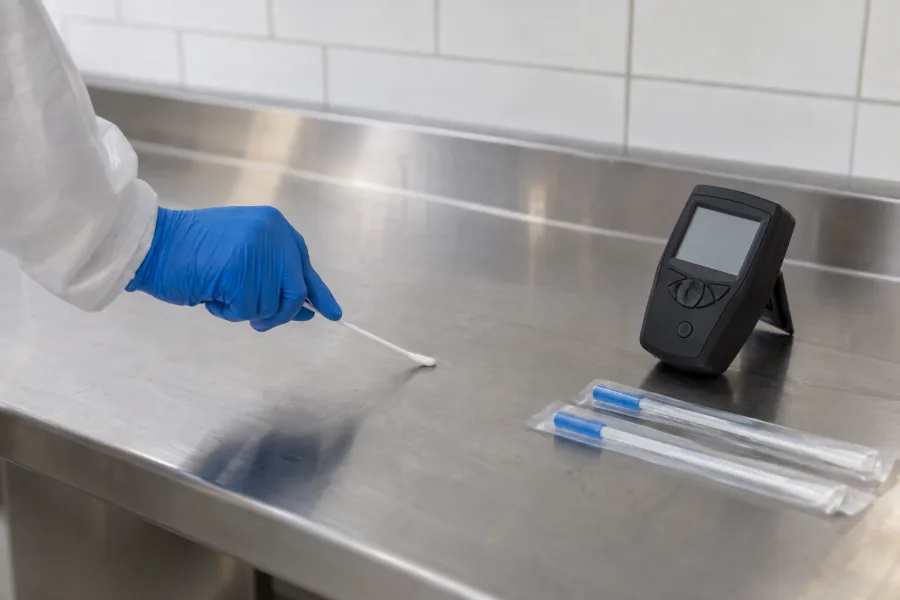
12-07 Tubular
- Tube bores and tubesheet faces at 32 Ra
- Product-side tube joints welded, ground and polished
- Drains through the low nozzle as installed
11-09 Plate-Type
- Plate faces and ports at 32 Ra
- Gasket retention and plate identification rules
- Frame opens to inspect every plate
3-A requirements at a glance
Construction
- Governing standard: 12-07 tubular; 11-09 plate-type
- Product-contact metal: 300-series stainless (304, 304L, 316, 316L) or listed alloys
- Product-contact finish: No. 4 finish equivalent, 32 Ra maximum, free of pits and folds
- Welds on product side: Continuous, ground and polished flush, no undercut or crevice
- Fittings: Sanitary clamp, bevel seat or equivalent; no pipe threads on product side
- Drainability: Self-draining in the installed orientation; no product pockets
Verification and use
- Who verifies: Certified Conformance Evaluator under the 3-A TPV program
- What is inspected: Drawings, fabrication practice, finish, gasket design, cleanability
- Symbol: Applied by the authorized fabricator to conforming units only
- Renewal: Periodic re-evaluation to keep the authorization current
- Related practice: 3-A 609 for culinary steam used in direct contact or for SIP
- Typical duty: HTST and UHT, cream and whey, CIP supply, egg, juice under inspection
The symbol is the proof, not the polish
Building a heat exchanger to 3-A
Materials and finish under 12-07 and 11-09
Both standards limit product-contact metal to austenitic stainless of the 300 series or to alloys that are at least as corrosion resistant, with 304L and 316L doing nearly all of the work. The surface finish requirement is the familiar 32 Ra maximum, which the standard describes as equivalent to a No. 4 finish, and it applies to every surface the product touches: tube bores, tubesheet faces, channel heads, plate faces and ports. Mechanical polish is acceptable.
Non-product surfaces have their own rule: they must be smooth, corrosion resistant or coated, and free of the kind of pockets that trap wash water. On a shell-and-tube unit that means the shell exterior is usually a bead-blast or 2B mill finish, and the saddles are stainless with drain holes.
- Product side: 32 Ra maximum, verified by profilometer on a sample of surfaces
- Tube-to-tubesheet joints on the product side: welded, then ground and polished, never roller-expanded only
- Gaskets and O-rings: materials compliant with FDA 21 CFR 177, removable for inspection
Joints, fittings and drainability
3-A allows welded joints and demountable joints, and is specific about each. Permanent joints on the product side are continuous welds ground flush. Demountable joints use sanitary clamp ferrules, bevel-seat unions or a design shown to be equally cleanable; NPT threads are not permitted where product flows. On a plate exchanger the standard adds rules for gasket retention, plate identification and the frame's ability to be opened for visual inspection of every plate.
Drainability is judged in the installed position. A horizontal shell-and-tube unit built to 12-07 has its product connections placed so that the tube side empties through the low nozzle, and the heads have no ledge where the last inch of product can sit. If the unit is to be mounted on a slope, the slope goes on the drawing and the saddles are cut to it.
Third Party Verification and the symbol
The 3-A Symbol program works at the level of the fabricator and the model, not the individual serial number. The shop submits a design for the standard it wants to build to, a Certified Conformance Evaluator reviews the drawings and inspects the practice, and if it conforms the shop receives an authorization number and may apply the symbol to units of that design. The authorization is renewed on a schedule, and any design change that affects a product-contact surface has to be re-evaluated.
When you receive a 3-A unit, the symbol on the nameplate carries the authorization number. That number can be checked against the 3-A SSI register, which is the fastest way for a QA group or a state inspector to confirm the claim.
Culinary steam and 3-A Accepted Practice 609
Steam that touches product, whether by direct injection or as the sterilizing medium in an SIP cycle on the product side, falls under 3-A Accepted Practice 609. It requires boiler feedwater treatment chemicals that are acceptable for food contact, a filtered and entrained-water-free steam supply, and stainless piping downstream of the final filter. If your exchanger is a clean-steam generator or a unit that will be steamed in place on the product side, tell the fabricator so the steam connections and the condensate drain are detailed to 609.
Specifying it
Write the standard number, state that the unit is to carry the 3-A symbol, and name the finish as 32 Ra maximum on product-contact surfaces with profilometer verification. Add the connection style and size, the mounting orientation, and whether the utility side needs to drain. That is a complete 3-A specification. Call and talk it through with an engineer: 1-805-484-2992
Common FAQs
No. 304 and 304L are acceptable under both 12-07 and 11-09. 316L is chosen for chloride resistance or for products with acid or salt, not to satisfy the standard.
They are related but distinct. USDA and FDA regulators sit on the 3-A committees and their inspectors recognize the symbol, but 3-A SSI is an independent organization and the symbol is its mark, not a government approval.
Only if it was built by an authorized fabricator to a verified design and the repair did not alter product-contact surfaces outside the standard. New equipment is the straightforward path.
18-03 covers multiple-use plastic materials for product-contact surfaces. It applies to the gaskets and O-rings in your exchanger, which is why 3-A units use elastomers documented against it.
Related

Design & Fabrication
ASME BPE & Pharma
Surface finish grades, weld records and drainability rules from the bioprocessing standard, on an exchanger.
+ Learn More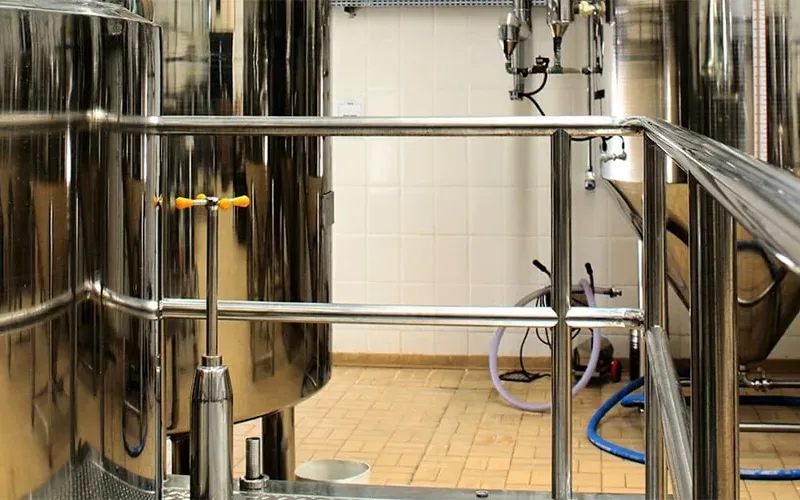
Design & Fabrication
Food-Grade Drainable
The design practice for beverage, brewing, sauces and non-inspected food duty: cleanable and dry.
+ Learn More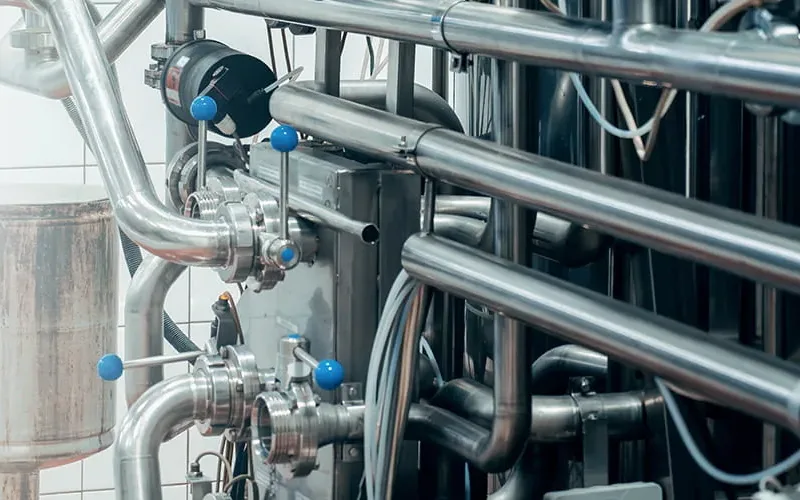
Design & Fabrication
Sanitary Standards
3-A, ASME BPE and food-grade drainable: what each one requires, what it costs, and how to pick the right one.
+ Learn More