
1-805-484-2992
Quotes - Engineering - SalesSteam that can touch the product, made from steam that cannot
Plant steam carries boiler chemicals, iron, and whatever the condensate return picked up on its way back, and none of it is welcome in direct-injection cooking, sterile-in-place piping or a pharmaceutical autoclave. A clean steam generator is a U-tube reboiler that keeps the two apart: plant steam condenses inside the U-tubes and treated feedwater boils in the shell around them. The steam leaving the shell has touched only polished stainless and the feedwater it came from. A separator section above the bundle knocks out entrained droplets, a level control keeps the bundle covered, and a blowdown removes the solids that concentrate in the shell.
The same construction serves two standards. Culinary steam under 3-A 609 is raised from softened or reverse-osmosis water and is fit for direct contact with food: injection cooking, blanching, retort and aseptic packaging sterilization. Pure steam under USP is raised from purified water or WFI so that its condensate tests as WFI; it is used for SIP of pharmaceutical process trains, autoclaves and lyophilizers.
The unit is a pressure vessel on both sides, U-stamped, with the shell side product contact and built to either 3-A or ASME BPE accordingly.
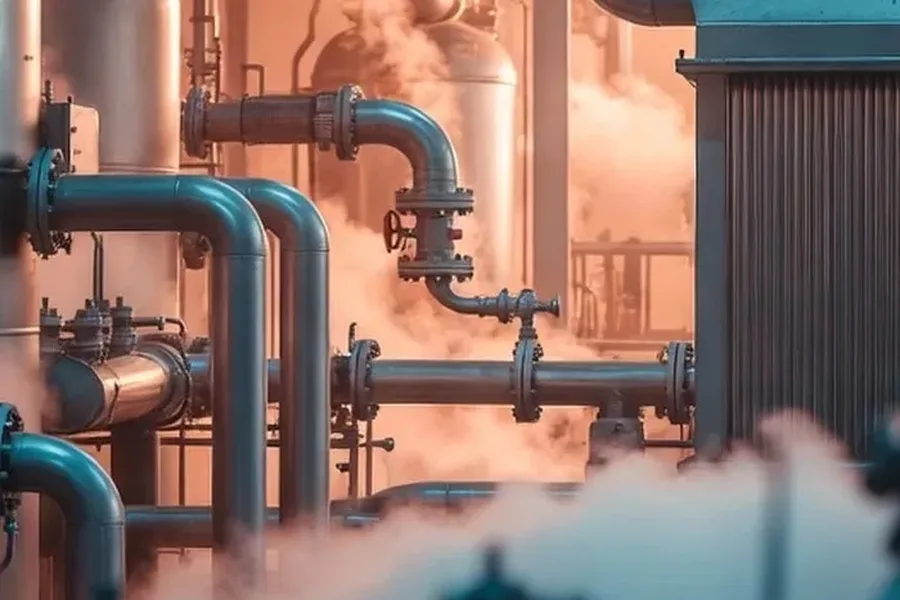
The dryness fraction on a clean steam generator is a design number, not a hope. The separator is sized for it and the level control protects it.
Culinary steam to 3-A 609, pure steam to USP, from the same U-tube reboiler construction.
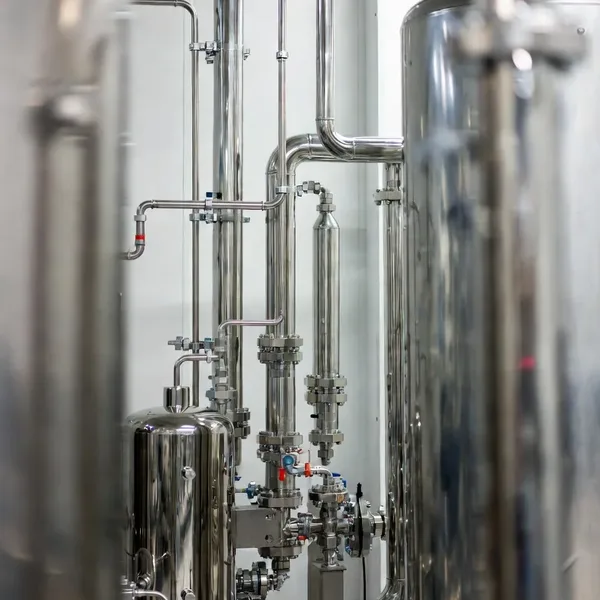
Dry steam by design
- Separator sized on vapor velocity at lowest pressure
- Mesh pad or cyclonic inlet drops entrained droplets
- Delivered dryness better than 95 percent
- Level control keeps tubes covered and carryover out
- Gauge glass, transmitter and level switches included
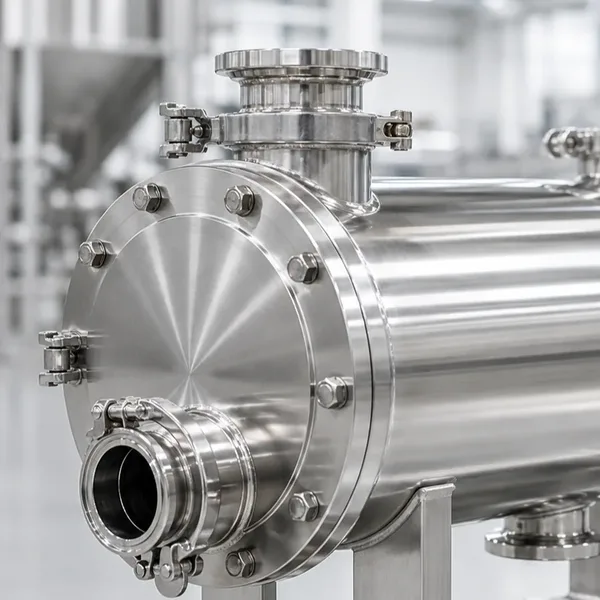
Culinary or pure steam
- Culinary steam raised from softened or RO feedwater
- Pure steam raised from purified water or WFI
- 316L throughout the clean side for pure steam
- Sample cooler lets condensate be tested to WFI limits
- Blowdown sized to hold shell conductivity down
Specify It With

Clean steam generator, typical build
This is the build a clean steam generator normally carries, split between culinary and pure steam service. Anything your specification changes is quoted as an adjustment, so send your steam use and feedwater type with the request.
| Feature | Detail |
| Construction | U-tube bundle, plant steam in the tubes, feedwater boiling in the shell |
| Clean steam output | Generally 100 to 5,000 lb/hr per unit; larger on request |
| Clean steam pressure | 15 to 60 psig typical for culinary; 30 to 50 psig typical for SIP |
| Plant steam | 60 to 150 psig, with roughly 15 to 30 psi above the clean steam pressure |
| Feedwater, culinary | Softened or RO water per 3-A 609; carbon steel piping acceptable upstream |
| Feedwater, pure steam | Purified water or WFI per USP; 316L throughout the clean side |
| Materials | 304L shell and 316L tubes for culinary; 316L shell, tubes and separator for pure steam |
| Finish | 32 Ra shell side for culinary; 20 Ra or electropolished for pure steam |
| Tubesheet | Single for culinary; double tubesheet standard for pure steam |
| Package | Separator, level control, gauge glass, safety valve, blowdown, sample cooler; ASME U-stamp, 3-A 609 or ASME BPE |
Specifying and operating a clean steam generator
Why a U-tube reboiler
Plant steam at up to 150 psig condensing inside the tubes runs 40 to 100 F hotter than the boiling feedwater around them, and the unit cycles from cold every time it is started. A U-tube bundle takes that differential without a bellows and takes the cycling without fatigue, and it can be withdrawn from the shell for inspection of the boiling surface, which is where scale would form if the feedwater ever went out of spec. The tubes are 316L, seal welded to the tubesheet on the clean side, and the shell interior is polished because it is the product-contact surface.
Feedwater is the whole game
The steam is only as clean as the water it was made from. 3-A 609 accepts softened or RO water for culinary steam and lists the additives that may and may not be present; the generator concentrates whatever the feedwater carries, so blowdown is sized to hold shell-side conductivity below the point where carryover becomes a concern. Pure steam needs purified water or WFI, because USP judges the steam by its condensate: conductivity, TOC and endotoxin must meet WFI limits. That in turn means 316L throughout the clean side, electropolish where specified, and a sample cooler on the outlet so the condensate can be tested.
- Culinary: softened or RO water, blowdown for conductivity
- Pure steam: PW or WFI feed, condensate tested to WFI
- Feedwater pump and level control sized for the swing
- Sample cooler on the clean steam outlet
Separation, dryness and carryover
Steam leaving a boiling surface carries droplets. A vertical separator section above the bundle, with a mesh pad or a cyclonic inlet, drops those back into the shell so the delivered steam is dry, typically better than 95 percent dryness at the outlet. The separator is sized on vapor velocity at the lowest operating pressure, since that is where specific volume and velocity are highest. Level control matters for the same reason: a high level floods the separator and carries water over, a low level uncovers tubes and scales them. A gauge glass, level transmitter and high and low switches are part of the package.
Drainage, cleaning and documentation
The shell drains through a sanitary valve at the bottom, the separator drains back to the shell, and the clean steam line is pitched to drain toward the generator so condensate never pools. Passivation after fabrication and a periodic acid wash for culinary units on softened water keep the boiling surface clean; pure steam units on WFI generally need no chemical cleaning but are inspected on a schedule. The package ships with the U-stamp, material certifications, weld maps, surface finish readings and, for pure steam, the documentation a validation protocol expects.
Clean steam is a well-understood piece of equipment when the feedwater, the separator and the level control are specified together. Call and talk it through with an engineer: 1-805-484-2992 Condensing the clean steam once it has done its work is covered on our clean steam condenser pages.
Common FAQs
Culinary steam under 3-A 609 for direct food contact: injection cooking, blanching, retorts, aseptic packaging sterilization. Pure steam under USP for pharmaceutical and biotech SIP, autoclaves and lyophilizers, where the condensate must meet WFI. The construction is the same; the feedwater, materials and documentation differ.
Roughly 15 to 30 psi above the clean steam pressure you want, so 60 to 100 psig plant steam for 30 to 50 psig clean steam is typical. Higher plant steam pressure shrinks the bundle; the quote shows the trade.
The separator is sized for the duty and the delivered steam is typically better than 95 percent dryness at the outlet when the level control is holding. Superheat is not added; the steam is saturated at its delivery pressure.
Pure steam generators are usually built with double tubesheets so a tube joint leak cannot admit plant steam condensate into the clean shell. Culinary units are often single tubesheet with seal-welded tubes, and a double tubesheet is available when the plant's risk assessment asks for it.
Softened or RO water for culinary steam, with blowdown to control shell conductivity. Purified water or WFI for pure steam. Untreated city water scales the bundle and carries over hardness; it is not an option on either.
Yes. Pure or culinary steam at 30 to 50 psig gives the 250 F plus needed for SIP, and the sanitary outlet and drainable steam line are designed for it. The plant's SIP demand at start-up is usually the peak load and is what the unit is sized for.
Related
Sanitary Exchangers
Evaporators
Concentration under vacuum on polished tubes: falling film, rising film and forced circulation.
+ Learn More
Sanitary Exchangers
Vapor Condensers
Vapor in, liquid out, and the non-condensables sent somewhere they cannot blanket the tubes.
+ Learn More
Sanitary Exchangers
Evaporators & Condensers
Phase change with a sanitary surface: concentrating product, condensing vapor and raising clean steam.
+ Learn More