
1-805-484-2992
Quotes - Engineering - SalesThe exchanger at the end of the loop
A WFI loop at 80 C is too hot to put into a formulation vessel, a glass washer rinse, a buffer make-up tank or a CIP final rinse. A point-of-use cooler takes water off the loop at the use point, cools it to 20 to 25 C during the draw, and returns nothing to the loop. When the draw stops, the cooler is emptied, drained dry by gravity and, on most sites, steamed in place before the next use. It is a small exchanger by duty and a large one by scrutiny: it is the one component an auditor can walk up to, and it is where dead legs, standing water and single-wall separation get found.
The design that survives that scrutiny is a double tubesheet shell-and-tube in 316L, electropolished to 15 to 20 Ra, mounted vertically or on a slope with a low-point drain, with the WFI on the tube side and chilled or tower water on the shell side. The double tubesheet gap is open and visible. The connections are hygienic clamp to ASME BPE dimensions. The whole unit is sized to the draw rate at the point of use, which is often 5 to 50 gpm for a few minutes, not to the loop flow.
Request a Quote
A 30 gpm fill wants 25 C water from the first second
The cooler must deliver 25 C at the full draw with 20 percent margin, so the chilled water valve opens before the draw valve. Between draws it stands vertical or on a 3 degree slope, drains through a low-point valve and steams at 121 to 135 C.
Cooler construction
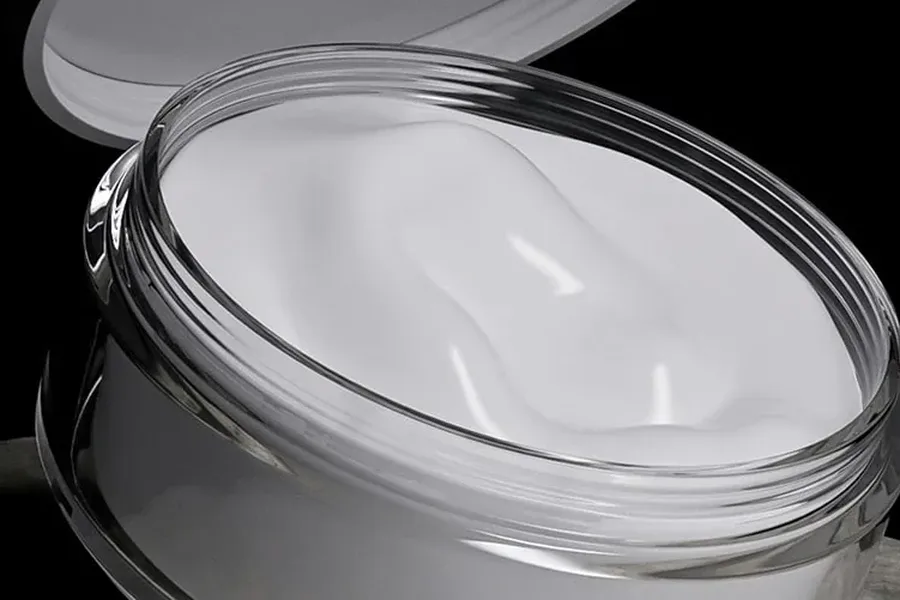
- Double tubesheet, gap open and inspectable
- 316L tubes and heads, electropolished 15 to 20 Ra, passivated
- Vertical or 3 degree slope with low-point drain
- Hygienic clamp connections per ASME BPE
- Rated for SIP at 121 to 135 C with steam on the product side
Skid and controls
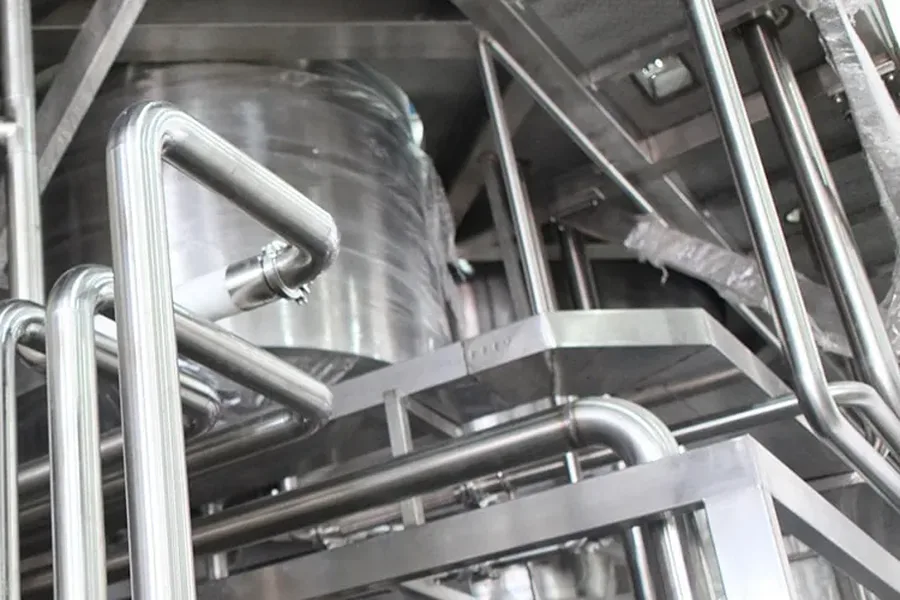
- Draw valve, drain valve and steam supply valve interlocked
- Outlet temperature transmitter with a low-limit alarm
- Steam trap on the SIP condensate leg, zero dead leg
- Chilled water control valve slaved to draw
- Frame in 304, product path in 316L, drip pan and vent
Recommended construction by point-of-use duty
The draw rate, the outlet temperature and whether the use point is steamed decide which of these fits.
| DUTY / CONDITION | RECOMMENDED CONSTRUCTION | WHY |
| WFI draw at 5 to 50 gpm, 80 C to 20 to 25 C, steamed between uses | Double Tubesheet | The standard answer: separation, drainability and SIP tolerance in one unit |
| Purified water draw on an ambient loop, trim cooling only | Double-Wall Plate | Small duty, low holdup, double-wall plates give leak visibility without the shell; not for SIP |
| High draw rate, 50 to 150 gpm, tank fill | U-Tube | Double tubesheet U-tube with a larger bundle; free expansion during SIP; bundle removable |
| Cooling to 5 to 10 C for cold buffers or washers on chilled glycol | Straight Tube | Double tubesheet straight tubes, drainable, glycol on the shell; approach kept small so the outlet does not hunt |
| Use point that must also deliver hot water at 60 to 65 C for washers | Double Tubesheet | Cooler run with tempered water on the shell; one unit does both duties under control |
Design points that decide a point-of-use cooler
The duty is short and sharp. A vessel fill at 30 gpm for ten minutes needs 80 C water dropped to 25 C at the full 30 gpm from the first second, because the vessel receives whatever comes out of the valve. There is no time for the cooler to warm the shell side or for the control valve to catch up, so the cooler is sized for the full draw with 20 percent margin, the chilled water valve opens ahead of the draw valve on the interlock, and the outlet transmitter closes the draw if the temperature is above the limit. A cooler sized on average use will send hot water into the vessel every time.
Between draws the cooler is a dead leg unless it is emptied. The rule of thumb for hot loops is that a branch longer than six pipe diameters without flow is a dead leg; a cooler full of stagnant water at 40 C is worse. The unit is mounted vertically or with a 3 degree slope, drained through a low-point sanitary valve, and the design has no horizontal tube run and no pocket where water stands. On sites that steam the use point, the cooler is rated for steam-in-place at 121 to 135 C on the product side with the shell side isolated, and the steam trap sits at the bottom of the product path with no leg above it.
The double tubesheet is not decoration. The chilled or tower water on the shell side is the least clean fluid in the room, and a rolled tube joint that weeps puts it into the WFI. Two tubesheets with an open gap mean the weep drips onto the drip pan where an operator sees it; a single tubesheet means the first sign is a failed bioburden sample a week later. The product-side tubesheet face is welded and polished to the tube finish so the joint itself is not a crevice.
Sized on the draw, drained by gravity, steamed on schedule
Chilled water versus tower water
Cooling 80 C water to 25 C on 30 C tower water is impossible; on 7 C chilled water it is routine. Where the use point needs 20 C or lower the shell side runs chilled water or glycol at 5 C; where 30 C is acceptable a two-stage cooler on tower water then chilled water saves refrigeration on a large draw. The shell side is controlled by a valve slaved to the draw signal, not by a thermostat that waits for the outlet to rise.
Plate coolers at the use point
Double-wall gasketed plates give leak visibility and a small footprint on ambient PW loops and on trim-cooling duties where the unit is not steamed. They are not the choice where SIP is required, because gasket life at 135 C is short and the plate pack does not drain as reliably as a vertical tube bundle.
The use-point skid
Most sites want the cooler delivered with its valves. The skid carries the loop take-off and return valves, the draw valve, the drain, the steam and condensate valves, a temperature transmitter and a chilled water control valve, all in hygienic clamp, on a 304 frame with a drip pan. The interlock logic is simple: open chilled water, open draw, monitor outlet; close draw, close chilled water, open drain, steam if scheduled, drain, close.
What settles the quote
Draw rate and duration, loop temperature, required outlet temperature, chilled or tower water available with temperature, whether the point is steamed, the finish and documentation the site specifies, and whether HeatX supplies the cooler alone or the skid. Call and talk it through with an engineer: 1-805-484-2992
Common FAQs
Draw rate, at the coldest outlet the use point ever needs, with margin. The loop flow is irrelevant to a use point that takes a slipstream; the cooler sees only what the draw valve passes.
If the site steams its use points, yes, and the cooler is rated for 135 C steam on the product side with the shell isolated. If the site relies on the hot loop and drains the cooler dry between uses, SIP rating is still cheap insurance.
20 to 25 C for formulation and rinse water. Cold buffers and some washers want 5 to 10 C, which takes chilled glycol on the shell side and a smaller approach.
A cold loop must be sanitized on a schedule and monitored more tightly; a hot loop sanitizes itself. Cooling only the draw keeps the loop at 80 C and puts the risk in one small, inspectable exchanger.
Related
Applications
WFI & Purified Water
Loop heaters, loop coolers, still condensers and sanitization heaters for water that must stay as it was made.
+ Learn More
Applications
Bioreactors & Extraction
Jacket loops held to a tenth of a degree, media sterilized and cooled, solvent chilled to -40 F and recovered.
+ Learn More
Applications
Pharmaceutical & Biotech
WFI and purified water, point-of-use cooling, bioreactor loops and extraction chilling, built to ASME BPE.
+ Learn More