
1-805-484-2992
Quotes - Engineering - SalesFood and Beverage Heat Exchangers
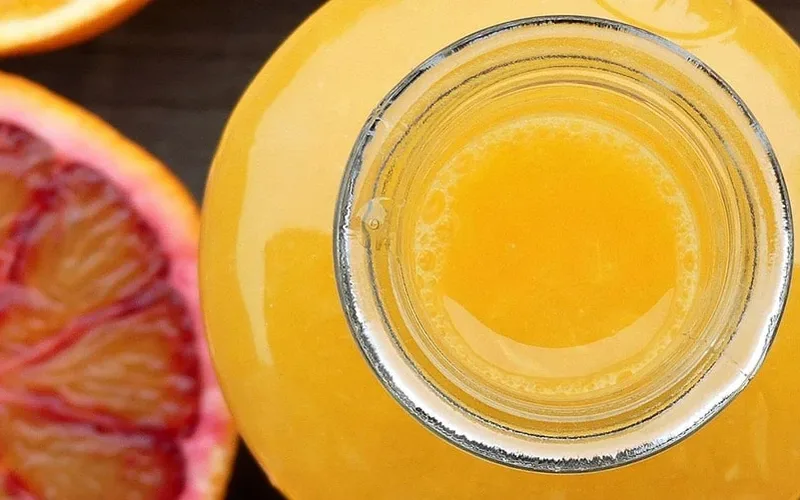
Juice is pasteurized at 185 to 195 F for 15 to 30 seconds, hot filled at 180 to 185 F or cooled to 40 F for cold fill, and the choice between plates and tubes comes down to pulp. Clear juice, tea, sports drinks and syrups run on gasketed plates with regeneration; orange juice with pulp, smoothies and nectars run in tube-in-tube where the fiber has room.
The page covers pasteurizer sections and hold, hot-fill versus cold-fill cooling, deaeration heat, sugar syrup dissolving and cooling, and where a wide-gap plate is a legitimate middle answer. Carbonated drinks, cold brew and kombucha have their own paragraph because they are cooled rather than pasteurized and the exchanger is a different one.
Tomato sauce, salsa, soups, baby food, fruit preparations and pet food slurries carry pieces from 1/8 inch to 1/2 inch and viscosities from 200 to 20,000 cP. Nothing with a gasket in the flow path survives that; the exchanger is a single tube-in-tube or multi-tube with a bore chosen above the largest piece and a velocity chosen for the slowest one.
That page explains tube bore selection, residence time distribution for particulate sterilization, scorching on the utility wall, and how to get 15 to 30 psi of pressure drop instead of 80.
Wort leaves the kettle at 212 F and must reach pitching temperature, 50 to 55 F for lagers and 65 to 68 F for ales, in one pass through a two-stage plate chiller on city water then glycol. Wine must is cooled for cold soak and warmed for fermentation. Distillery duty adds mash coolers, beer stills, condensers on the spirit vapor and the dephlegmator that sets reflux.
The page has wort chiller staging and heat recovery to hot liquor, must exchangers for skins and seeds, still condensers sized on vapor rate, and the CIP that keeps hop resin off the plates.
Whole egg, whites and yolk pasteurize a few degrees below the point where they set, so the exchanger runs a tight approach, a low wall temperature and a product side that rinses clean between runs. Tube-in-tube and wide-gap plates carry the viscosity; cooling to 40 F follows the hold.
Salted and sugared yolk, blends and mixes each shift the hold temperature and the viscosity, and the sizing shifts with them.
Vegetable, seed and tropical oils are heated for refining, cooled for storage and crystallized into shortening and margarine, mostly on shell-and-tube with thermal fluid or steam. Deodorizer heat recovery runs well above 400 F.
Oils carry little water, so 304L is common on the product side; the utility side and the cleaning regime decide the rest.
Pasteurizers, coolers and condensers for juice, sauces, brewing, distilling, liquid egg and edible oils.
Where They Run




Food and beverage exchangers are a wider spread of fluids than dairy, from water-thin tea to 20,000 cP pie filling, and one plant may run all of them on the same day. That variety is why this section is organized by what is in the product rather than by what the product is called: a smoothie with fruit fiber and a tomato sauce with diced onion are the same exchanger problem, and a clear apple juice and a sports drink are the same exchanger as fluid milk. Four things settle the selection, and the sub-application pages give the numbers behind each.
What is in the fluid
- Clear liquids: gasketed plates, regeneration, lowest cost per square foot
- Pulp and fiber up to 1/8 inch: wide-gap plates or corrugated tube-in-tube
- Pieces 1/8 to 1/2 inch: single tube-in-tube or multi-tube, bore above twice the largest piece
- Pieces above 1/2 inch: the piece is dosed after the exchanger, not through it
Thermal profile
- Juice pasteurization 185 to 195 F, 15 to 30 seconds
- Hot fill 180 to 185 F; cold fill cooled to 40 F on glycol
- Wort 212 F to 50 to 68 F in one pass; must 90 F to 50 F
- Egg 140 F for 3.5 minutes; oils 400 to 500 F on thermal oil
Cleaning and inspection
- Sugar and pectin need hot caustic and a rinse to clarity; brewing adds an acid step for beerstone
- Products with allergens run on units that open or drain fully between changeovers
- Tube-in-tube with removable inner tube where the plant wants to see the surface
- Design pressure margin for CIP pump head, usually higher than product
Codes and finish
- 3-A on dairy-derived and egg products; food-grade drainable elsewhere
- 316L product side where the product is acidic (juice, must, tomato, vinegar)
- 32 Ra product finish standard, 20 Ra where the customer's audit asks
- ASME U-stamp on any shell above 15 psig; PED or CRN for export
Related
Applications
Dairy
Pasteurizers, regenerators, cream and whey coolers and cheese-milk heaters, built to 3-A, sized to your line.
+ Learn More
Applications
Pharmaceutical & Biotech
WFI and purified water, point-of-use cooling, bioreactor loops and extraction chilling, built to ASME BPE.
+ Learn More
Applications
Water & Utility
The exchangers behind the process: high-purity water, CIP supply, clean steam and aseptic sterile barriers.
+ Learn More