
1-805-484-2992
Quotes - Engineering - SalesThree fluids that only look alike
Milk, cream and whey come off the same cow and behave like three different products in an exchanger. Whole milk is close to water: about 2 cP at 70 F, easy to push through a plate pack, fouls slowly below 160 F. Cream at 40 percent fat is 20 to 40 cP cold and shear-thinning, channels through the outer plates of a wide pack, and its fat globules break under high shear. Whey is thin but carries curd fines and dissolved calcium phosphate that scales any surface above 160 F, and sweet whey concentrate at 50 percent solids is viscous and sticky.
Duties in this family are mostly single-purpose: cool raw milk from 95 F at the receiving bay to 38 F; warm milk to 110 to 130 F for separation; cool cream to 40 F for storage or heat it to 165 F before churning; cool whey from the vat at 95 F to 40 F for storage or to membrane temperature; cool permeate; and warm standardizing cream back into the milk stream. None of them need a holding tube, all of them need the right channel for the fluid.
Request a Quote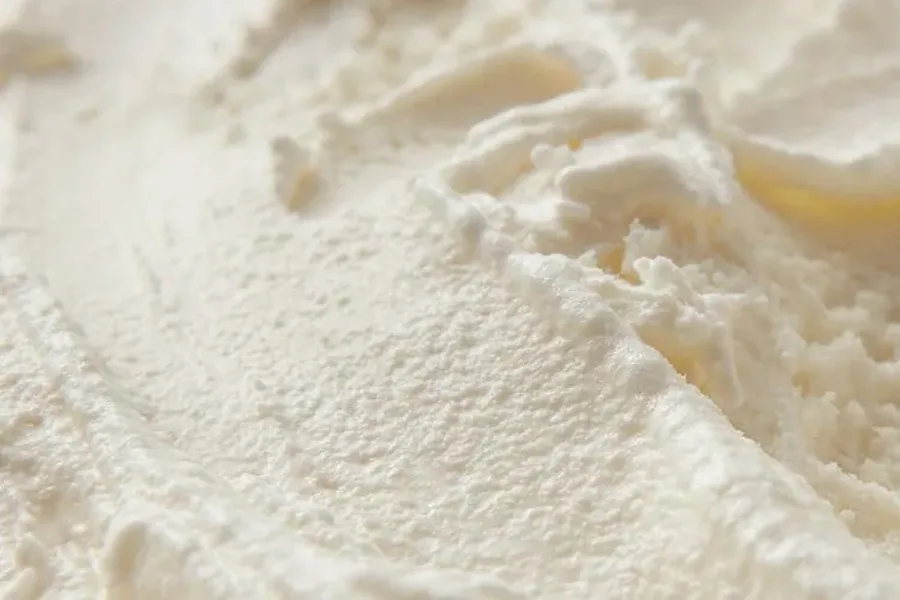
Milk takes plates, cream takes wide gaps, whey takes tubes
Whole milk at 2 cP runs through a gasketed pack below 160°F. Cream at 30 to 40 cP wants a doubled gap and 2 to 3 ft/s to spare fat globules; whey fines that plug a 3 mm plate gap pass a 12 mm tube bore.
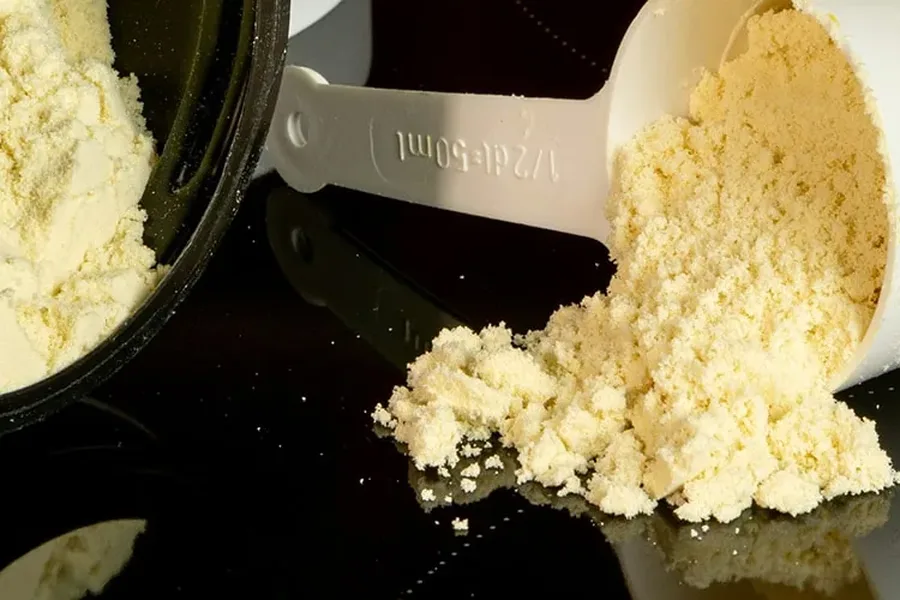
Raw milk and separation coolers
- Two-stage: tower or well water first, chilled water or glycol second
- 95 F to 38 F at 20,000 to 100,000 lb/h on a single frame
- Separator feed heater on hot water at 110 to 130 F
- 3-A plates, EPDM gaskets, 316L product side
- Frame sized with 20 percent spare plate room
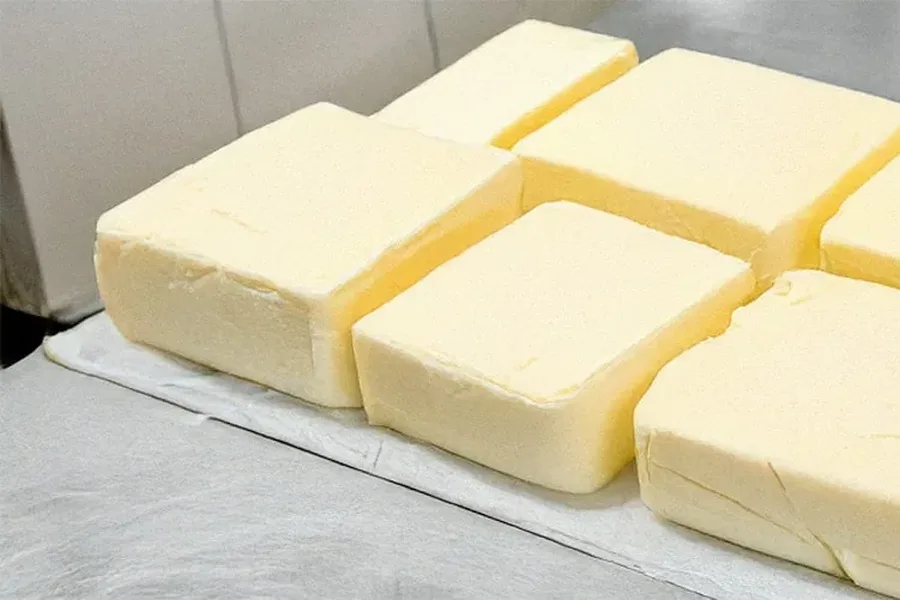
Cream and whey exchangers
- Wide-gap plates or tube-in-tube at cream viscosity
- Velocity held to 2 to 3 ft/s on cream to limit shear
- Whey cooled below 160 F quickly to stop calcium phosphate scaling
- Fines pass a 12 mm tube bore that would plug a 3 mm plate gap
- Acid CIP step sized for whey mineral deposits
Recommended construction by product
Match the channel to the fluid and most of the fouling and pressure drop problems never appear.
| DUTY / CONDITION | RECOMMENDED CONSTRUCTION | WHY |
| Raw milk cooling, receiving bay or silo loop | Gasketed Plate | Water-like fluid, large flow, two utility stages in one frame; the cheapest area available |
| Cream cooling or heating, 30 to 45 percent fat | Wide-Gap Plate | Doubled gap keeps velocity and pressure drop workable at 20 to 40 cP without shearing fat globules |
| Whey and permeate cooling off the vat or membrane | Corrugated Tube | Fines pass freely; corrugation keeps the coefficient up on a thin fluid; acid CIP reaches every surface |
| Whey concentrate, 40 to 60 percent solids, cooling before evaporator or dryer | Single Tube-in-Tube | Large bore for a viscous, sticky fluid; low pressure drop; brushable if a run goes long |
| Milk heating on plant steam, small plant or cheese room | U-Tube | Steam on the tube side, free expansion; no hot water set required on a small line |
| Cream heating for churning or pasteurizing, brushable unit | Straight Tube | Fully drainable, tubes can be brushed after a fat run; sanitary tri-clamp heads |
What each product does to a heat transfer surface
Milk fouls in two regimes. Below about 160 F very little deposits; the film coefficient on a plate is 1,500 to 2,500 Btu/h-ft2-F and a raw milk cooler runs for days on nothing but a rinse. Above 160 F whey protein starts to unfold and calcium phosphate loses solubility, so a separator feed heater at 130 F is clean while a milk heater to 175 F is not. Keep hot water approach small on any milk heater above 160 F and the deposit stays a thin film rather than a crust.
Cream is a viscosity and shear problem more than a fouling one. At 40 F and 40 percent fat it is 30 to 40 cP and flows badly through the outer channels of a plate pack, so the inner channels do all the work and the outlet temperature wanders. Wide-gap plates and tube-in-tube with a 1 to 1-1/2 inch bore keep the flow distributed. Shear matters because high velocity through a narrow channel damages the fat globule membrane and the cream churns or feathers; hold cream to 2 to 3 ft/s in the channel and use a lower pressure drop design than you would for milk.
Whey brings fines and minerals. Sweet whey off the cheese vat carries curd fines that lodge in narrow plate gaps and at gasket corners; a 3 mm plate gap plugs, a 12 mm tube bore passes them. Whey also scales faster than milk because its calcium and phosphate are already in solution without casein to hold them; cool it below 160 F fast and keep the acid step in the CIP program. Acid whey from cottage cheese and Greek yogurt is at pH 4.5 and attacks 304 at temperature, so 316L is the product-side material on acid whey exchangers.
Viscosity, fouling and fines: the three numbers
Two-stage raw milk cooling
A receiving bay cooler takes milk from 90 to 95 F to 38 F. Doing that on chilled water alone wastes refrigeration; the first section on tower or well water at 60 to 70 F takes the milk down to 70 to 75 F for nothing, and the chilled water or glycol section finishes to 38 F. Both sections live on one plate frame with a connection plate between them. Size the chilled section for the warmest tower water the plant sees in August.
Separator and standardizer heaters
Separation runs best with milk at 110 to 130 F, so a separator feed heater on hot water is a small, clean duty that runs for days. The standardizing cream returned to the skim stream is often the same temperature and rejoins through a static mixer. Where the plant wants to separate cold at 40 to 45 F the heater drops out and the separator capacity is derated.
Glycol versus chilled water
Chilled water at 34 to 36 F cools milk to 38 to 40 F economically; getting to 36 F or lower on the product needs propylene glycol at 25 to 28 F. Glycol's viscosity and lower specific heat mean 30 to 50 percent more flow and about 20 percent more plate area for the same duty, so the decision is made once, on the outlet temperature the filler or silo really needs.
What to send for a quote
Product and fat or solids content, flow, inlet and outlet temperatures, utility available with its temperature and flow, whether the unit must be brushable, and the CIP chemistry the plant already runs. For whey say whether it is sweet or acid and whether fines are removed first. Call and talk it through with an engineer: 1-805-484-2992
Common FAQs
It can run both, but a pack gapped for milk will channel on cream and a pack gapped for cream wastes area on milk. If both products run daily, a wide-gap plate handles both with a modest penalty on milk; if cream is occasional, size for milk and accept a slower cream run.
Whey has its calcium phosphate in free solution and no casein to buffer it, so above 160 F it precipitates on the first hot surface it meets. Cool whey below 160 F within seconds of leaving the vat and add an acid step to the CIP program; the scale stops.
316L on the product side. Acid whey at pH 4.5 and 100 F will pit 304 over a season, particularly at heat-affected zones around tube welds and at plate gasket grooves.
Grade A regulations require milk to reach 45 F or below within two hours of milking and to be held at or below 45 F; most plants cool to 38 F on receipt in a single pass. A plate cooler does this in seconds of residence time; the constraint is the chilled utility capacity, not the exchanger.
Related
Applications
HTST Pasteurization
Regeneration, heating, holding and cooling in one frame, sized so every particle sees 161 F for 15 seconds.
+ Learn More
Applications
UHT & ESL
Indirect sterilizers for 275 to 285 F and ESL heaters for 250 to 260 F, built to run a shift between CIPs.
+ Learn More
Applications
Yogurt & Cheese
Mix heaters, culture-temperature coolers, cheese-milk warmers and whey heaters that respect cultured product.
+ Learn More