
1-805-484-2992
Quotes - Engineering - SalesThe heater on the CIP skid
Every clean-in-place system in a sanitary plant has at least one heat exchanger in it, and it is the one that sets the cycle time. A typical program is a pre-rinse with warm recovered water at 100 to 140 F, a caustic wash with 1 to 2 percent sodium hydroxide at 160 to 180 F for 20 to 40 minutes, an intermediate rinse, an acid wash with 0.5 to 1 percent nitric or phosphoric acid at 140 to 160 F for 10 to 20 minutes for milkstone and mineral scale, a final rinse and a sanitizer. The CIP supply heater has to lift the solution to those temperatures either in the tank before the cycle or in line as the solution goes out, and it has to do it at the CIP flow rate, which is set by the requirement for 5 ft/s in the largest pipe on the circuit and is usually higher than the process flow.
The heater is almost always a steam-to-solution shell-and-tube: plant steam on one side, CIP solution on the other, with a modulating steam valve controlled on the supply temperature. It is a utility exchanger by function but its solution side shares piping with the product path and is inspected as sanitary equipment, so it is built drainable, in stainless with a 32 Ra finish, with tri-clamp connections and a gasket compound that survives caustic, acid and the sanitizer.
Request a Quote
A 1,000 gallon tank from 120 to 170°F in 20 minutes
That is about 1.25 million Btu/h and 1,300 lb/h of steam; given an hour, the heater is a third the size. In-line heating at 200 gpm with a 50 degree rise is 5 million Btu/h, and the solution side is rated past the 150 psi shutoff head.
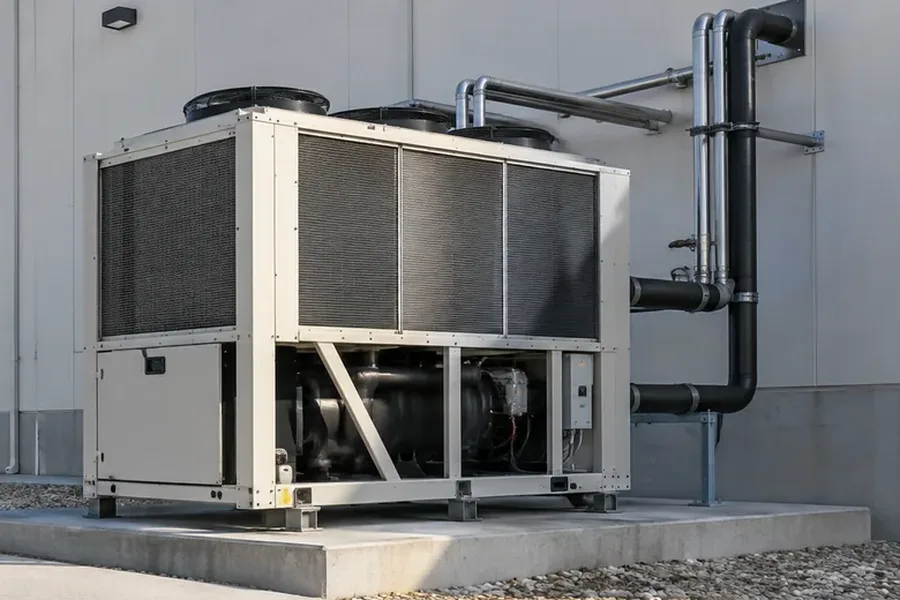
In-line CIP supply heater
- Heats solution on the way out at the full CIP flow rate
- Steam on the tube side, solution on the shell side
- Modulating valve on supply temperature, 2 to 3 degree control
- 304 or 316L solution side, EPDM seals
- Sized on flow and rise, not tank volume
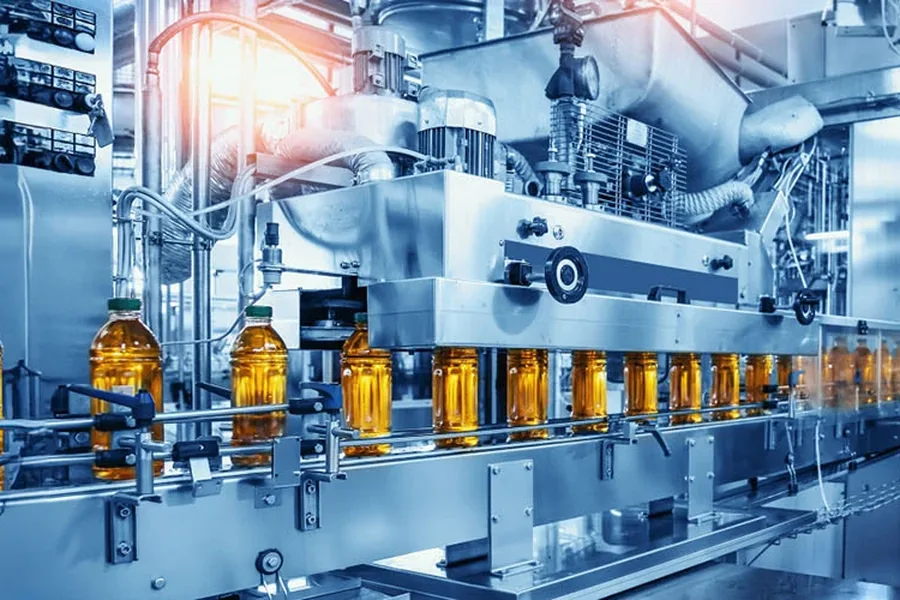
Tank heating and rinse recovery
- Recirculation heater lifts the tank in 15 to 30 minutes
- Sized on tank volume, rise and the time the cycle allows
- Rinse recovery exchanger reclaims heat from final rinse to pre-rinse
- Vented and drained so caustic does not sit in the shell
- Design pressure covers the CIP pump shutoff head
Recommended construction by CIP duty
CIP heaters are steam-to-liquid duties on a corrosive but non-fouling fluid. The geometry follows the steam and the cleaning of the heater itself.
| DUTY / CONDITION | RECOMMENDED CONSTRUCTION | WHY |
| In-line caustic and acid supply heater on plant steam, 50 to 500 gpm | U-Tube | Steam on the tube side with free expansion; solution on the shell at low pressure drop; bundle pulls for inspection |
| Recirculation heater on a CIP tank, batch heat-up in 15 to 30 minutes | Straight Tube | Fully drainable so caustic never sits; brushable; steam or hot water on the shell side |
| Single-pass CIP for a small plant or a mobile CIP cart | Gasketed Plate | Compact steam-to-water or hot-water-to-solution plate; opens for gasket change after years of caustic |
| Rinse water recovery, final rinse to pre-rinse | Gasketed Plate | Water-to-water at close approach recovers most of the final rinse heat; cheapest area for the duty |
| CIP solution heater where steam cannot enter the sanitary area | Clean Steam Generator | Clean steam made from RO or softened water heats the solution with no boiler chemicals near the product path |
| CIP heater on a line that is also steamed in place | Double Tubesheet | Where the same heater sees product-side steam at 250 F and plant steam on the utility side, the gap keeps them apart |
Sizing and building a CIP supply heater
The sizing question on a CIP heater is time, not duty. A 1,000 gallon caustic tank held at 120 F between cycles has to be at 170 F when the wash starts; if the schedule gives 20 minutes, the heater has to deliver about 1.25 million Btu/h, which is roughly 1,300 lb/h of steam and a heater with a 2 inch steam valve. If the schedule gives an hour, the heater is a third of that. In-line heating is sized differently: the solution goes out at the CIP flow rate, say 200 gpm, and must rise from the tank temperature to 170 F in one pass, which at a 50 degree rise is 5 million Btu/h and a much larger heater that runs only while the wash is out. Most skids do both: a recirculation heater holds the tank near temperature and the in-line heater trims.
Materials follow the chemistry. Sodium hydroxide at 2 percent and 180 F is not corrosive to 304 or 316, but the acid step, particularly nitric at 160 F, and the chlorine-based sanitizers some plants still use, argue for 316L on the solution side. Gaskets and seals are EPDM, which handles caustic, nitric and phosphoric acid and peracetic sanitizer; nitrile and silicone do not last. The heater is fully drainable so that caustic does not sit in a tube between cycles and concentrate as the water evaporates, and it is vented at the high point so it does not airlock on the first fill.
The design pressure of the solution side deserves a look. CIP pumps are chosen for head, because 5 ft/s through a long circuit with a spray ball at the end takes 60 to 100 psi at the pump, and the shutoff head can exceed 150 psi. A heater rated 100 psig on the solution side is a relief valve problem waiting to happen; HeatX rates the solution side for the pump's shutoff head and states the number on the drawing.
Sized on the cycle clock, built for 2 percent caustic
Heat recovery on CIP
A CIP cycle sends thousands of gallons of 170 F caustic and 150 F acid back to the tanks and thousands more of warm rinse to drain. A plate exchanger between the final rinse leaving the circuit and the fresh water filling the pre-rinse tank recovers 60 to 70 percent of that rinse heat, and a plant running ten cycles a day pays for the exchanger in a few months. The solution tanks themselves are kept warm between cycles by the recirculation heater at low fire rather than reheated from cold.
Heating the exchanger being cleaned
The heat exchanger on the process line is itself a CIP target. To clean a plate pasteurizer or a tube-in-tube, the CIP flow must reach 1.5 times the product flow so velocity in the largest channel passes 5 ft/s, and the caustic must arrive at temperature. A CIP supply heater sized on the process flow will fail that test; size it on the CIP flow the largest circuit demands.
Single-use and recirculating CIP
Single-use CIP makes fresh solution each cycle and sends it to drain, which suits small plants and allergen changeovers; the heater is in-line and sized for the full rise. Recirculating CIP reuses caustic and acid for weeks with make-up and filtration, and the heater is mostly a tank heater holding temperature. HeatX asks which type the skid is before sizing, because the heaters are different by a factor of three.
What to send for a quote
CIP flow rate, tank volumes, solution temperatures and the time allowed to reach them, steam pressure at the skid, chemistry including sanitizer, in-line or tank heating, and the CIP pump's shutoff head. Those numbers turn into a heater size and a steam valve size in one pass. Call and talk it through with an engineer: 1-805-484-2992
Common FAQs
It never touches product, but its solution side shares piping with the product circuit and inspectors treat it as sanitary equipment: drainable, stainless, tri-clamp, 32 Ra. HeatX builds CIP heaters to that standard; 3-A symbol authorization is available where the plant's inspector asks for it.
Tube side on a U-tube heater, so the bundle can expand freely and the solution on the shell side sees low pressure drop at CIP flow rates. Straight-tube units run steam on the shell where the plant wants brushable solution tubes.
160 to 180 F for fat and protein soils; 170 F is the common setpoint. Acid runs 140 to 160 F. Higher caustic temperature cleans faster but shortens gasket life throughout the circuit.
The acid step and chlorinated sanitizers do, particularly at welds and under gaskets. On a heater that will see nitric acid at 160 F for years, 316L on the solution side costs little and removes the question.
Related
Applications
High-Purity Water
RO, DI and demineralized water heated, cooled and tempered in metal that the water cannot take with it.
+ Learn More
Applications
Clean Steam & Aseptic
Clean steam from purified water for SIP and sterile barriers, and exchangers built to be sterilized and held.
+ Learn More
Applications
Water & Utility
The exchangers behind the process: high-purity water, CIP supply, clean steam and aseptic sterile barriers.
+ Learn More