
1-805-484-2992
Quotes - Engineering - SalesWater and Utility Heat Exchangers
Reverse osmosis permeate, deionized and demineralized water look harmless and are not: with the ions stripped out they are hungry, they pick up chloride from anywhere, and at low conductivity they attack the passive film on stainless steel at any temperature above ambient. The exchangers that heat RO feed, cool DI loops, temper rinse water and feed stills are built in 316L or better, drained fully, and finished so the water has nothing to pull off the wall.
That page covers the corrosion mechanism, when 316L is enough and when duplex or a higher alloy is called for, sizing RO feed heaters and DI loop coolers, and the plate versus tube choice at each purity level. RO, DI and demineralized water each have their own sub-heading because plants search for them separately, but the exchanger rules are the same three: conductivity, chloride and temperature. Semiconductor and laboratory ultrapure loops get a paragraph of their own for the stricter finish and the titanium option some site standards call for.
A CIP set needs hot caustic at 160 to 180 F, acid at 140 to 160 F and rinse water at 100 to 140 F, delivered at the flow that gives 5 ft/s in the largest line, and it needs them fast. The CIP supply heater is a steam-to-water or steam-to-solution shell-and-tube that lifts the tank contents in the time the cycle allows, and the solution itself is 1 to 2 percent caustic that dictates the metal and the gasket.
The page covers heater sizing on tank volume and heat-up time, in-line versus tank heating, caustic and acid compatibility, recovery of rinse heat, and the sanitary rules that apply to a heater that never touches product but shares its piping. It also covers the design pressure question that catches most CIP heaters: the CIP pump's shutoff head is often above the heater's rating. Single-use and recirculating CIP are treated separately because their heaters differ by a factor of three.
Clean steam is made from purified or RO water in a double tubesheet generator fed by plant steam, so that the steam used for SIP at 250 F for 30 minutes, for sterile barriers on valves and pumps, and for culinary injection carries nothing from the boiler. Aseptic lines need steam barriers on every seal downstream of the sterile hold, sterile condensate on coolers, and exchangers that can be steamed and held.
That page covers generator sizing on peak SIP demand, feedwater quality, steam quality tests, the sterile barrier concept and how an aseptic exchanger is built and validated. Culinary steam for direct injection in food plants and the difference between clean, pure and culinary steam have their own sub-headings, as does the food-versus-pharmaceutical line in aseptic construction.
The exchangers behind the process: high-purity water, CIP supply, clean steam and aseptic sterile barriers.
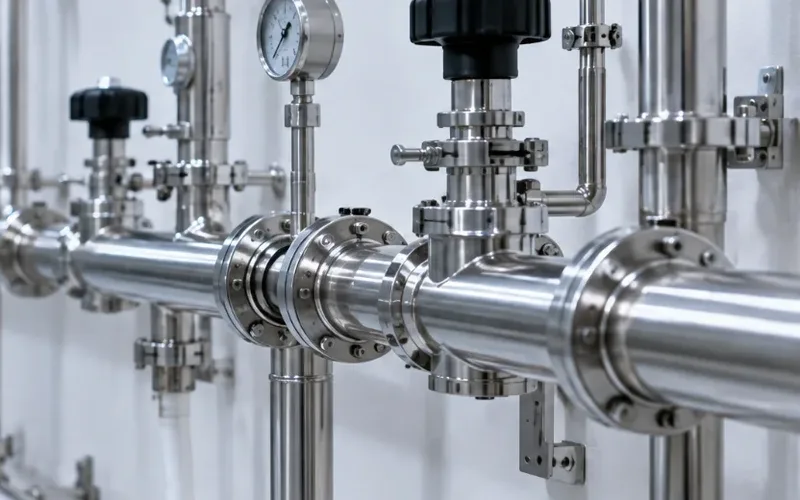
Where They Run



Utility exchangers get specified last and blamed first, and they outnumber the product exchangers in most sanitary plants. They are bought near the end of a project when the budget is thin, they are sized from a utility flow diagram that has been revised four times, and they are the first thing an operator sees when the CIP cycle runs long or the WFI loop reads iron. Four questions catch the mistakes that turn up a year after start-up, and each one is a fact about the water, the duty or the plant rather than a fact about the exchanger.
Water chemistry
- Conductivity and chloride of the water at operating temperature
- RO permeate 5 to 20 microS/cm; DI and demineralized under 1; WFI under 1.3 at 25 C
- Hot low-conductivity water and any chloride above 20 ppm push past 316L toward duplex
- Ozone or chlorine dioxide in the loop changes the elastomer choice
Duty shape
- Continuous loop tempering: steady, small approach, long life
- Batch heat-up of a CIP or sanitization tank: sized on time, big steam valve
- Clean steam: sized on peak SIP demand, with a margin for simultaneous users
- Aseptic coolers: steady product duty plus a steam barrier that runs all shift
Separation and drainability
- Double tubesheet wherever compendial water meets plant steam or tower water
- Full gravity drain on any unit that is steamed or that holds high-purity water
- Vent at the high point so a hot unit does not airlock on cooldown
- Utility condensate returned through an air gap on sanitary services
Materials and finish
- 316L on all high-purity water and clean steam surfaces; 304 acceptable on CIP solution side
- Electropolish and passivation on WFI and clean steam; mechanical polish 32 Ra on CIP
- EPDM for caustic and acid CIP; silicone or EPDM rated for SIP on clean steam
- ASME U-stamp on shells above 15 psig; CRN and PED for export
Related
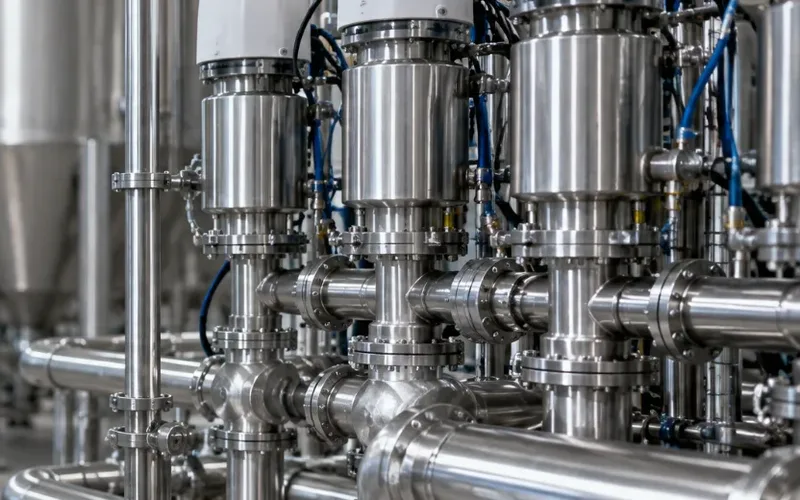
Applications
Dairy
Pasteurizers, regenerators, cream and whey coolers and cheese-milk heaters, built to 3-A, sized to your line.
+ Learn More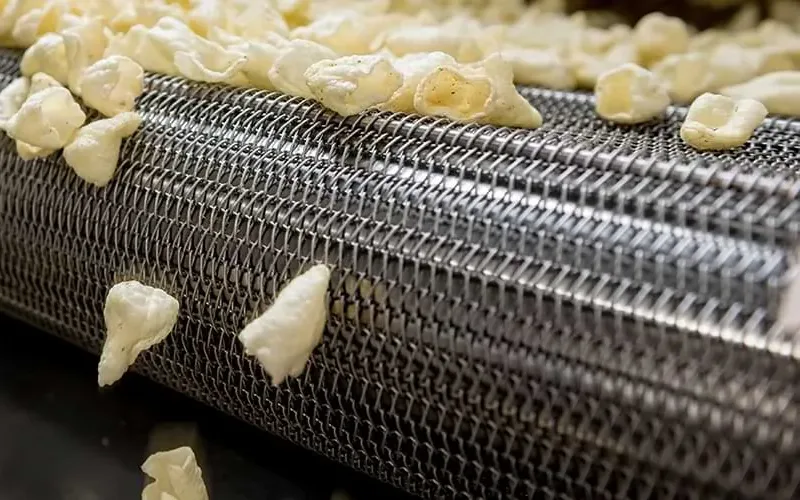
Applications
Food & Beverage
Pasteurizers, coolers and condensers for juice, sauces, brewing, distilling, liquid egg and edible oils.
+ Learn More
Applications
Pharmaceutical & Biotech
WFI and purified water, point-of-use cooling, bioreactor loops and extraction chilling, built to ASME BPE.
+ Learn More