
1-805-484-2992
Quotes - Engineering - SalesA panel is a drawing, and the drawing can be almost anything
The standard embossed panel is a rectangle, but the process that makes it does not care about the outline. The sheets are cut to shape first, the weld pattern is laid out inside that outline, and the inflation follows the pattern. So a panel can be a disc for a tank bottom, a truncated cone, a ring with a hole for an agitator shaft, an L that wraps a corner, a plate with cutouts for nozzles and sight glasses, or a long narrow strip that runs down a chute. It can be rolled to a radius, bent on a brake or dished. If the outline can be drawn and the passages can be routed through it, it can be built.
Custom also means the things inside the rectangle: the weld pattern spacing, the sheet gauge, the inflation height, the location and size of the connections, the choice of alloy and the finish on each face. Those are engineering decisions made against the duty and the rating, and they are stated on the drawing before anything is cut.
This page is for the panel that does not fit the Immersion or Integral descriptions, and for the buyer who wants to know what to send so the first quote is the right one.

Send the outline, the duty and the rating. The weld pattern, the gauge and the routing are ours to work out; the shape is yours.
How a custom panel gets from a sketch to a stamped drawing.
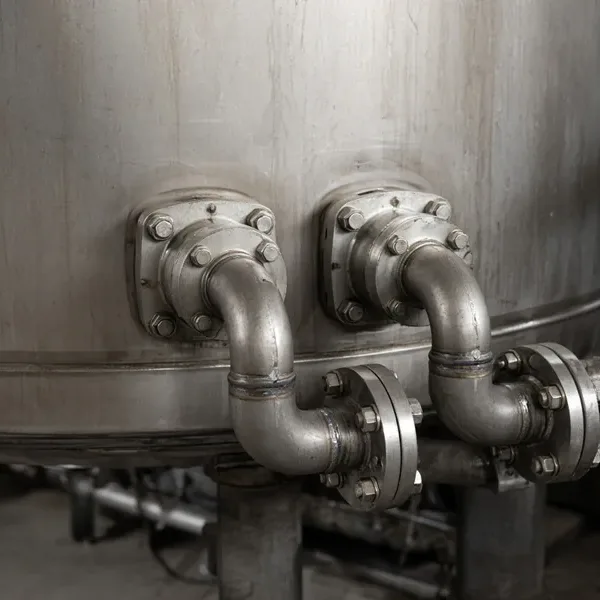
Any outline the sheet allows
- Discs, rings, cones and strips cut to drawing
- Cutouts anywhere, weld pattern re-run around them
- Rolled, brake-bent or dished to your vessel
- Connections placed where piping and drains need them
- Drawing issued before anything is cut
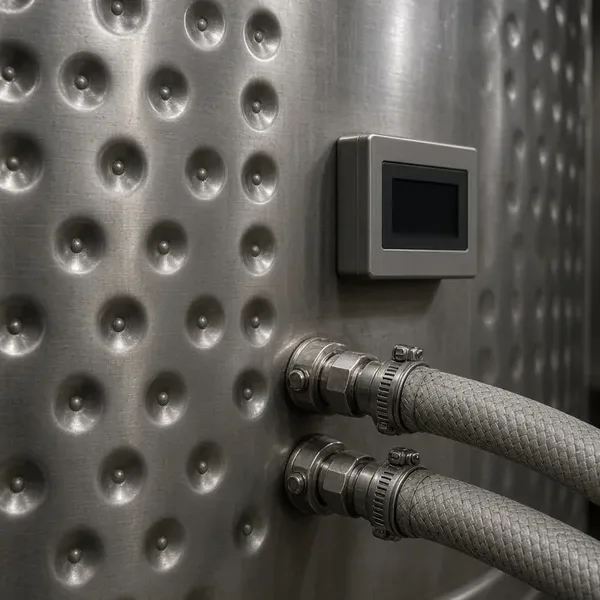
Rated by calculation
- Rating calculated from material, gauge and weld pitch
- Alloy chosen per face for each duty
- Each panel pressure tested prior to shipment
- Finish set per face, edge welds ground and blended
- Titanium or nickel alloys where stainless would fail
Quote It With



Custom panel options
Custom panels begin from your drawing, so this list covers what can be changed rather than a fixed catalog size. Mark up the options that apply to your tank or vessel and send the sketch with the quote request.
| Feature | Detail |
| Outline | Rectangles, discs, rings, cones, segments, strips; cutouts anywhere inside |
| Forming | Flat, rolled to radius, brake-bent, dished; formed before or after inflation as the shape requires |
| Embossing | Double-embossed both faces, or single-embossed with one flat face |
| Sheet gauge | 16 to 7 gauge typical; heavier for high pressure or large unsupported spans |
| Weld pattern | Spot or laser weld pitch and inflation height chosen for rating and flow |
| Materials | 304L, 316L, duplex, titanium, nickel alloys; carbon steel where the service allows it |
| Finish | Mill, 2B, 32 Ra, 20 Ra or electropolished, specified per face |
| Connections | Tri-clamp, NPT, socket weld or flanged; location and count to drawing |
| Flow routing | Single pass, serpentine or multi-zone, laid out in the pattern |
| Testing and codes | Hydrostatic or pneumatic test on every panel; ASME U-stamp, PED, CRN as specified |
Specifying a custom panel
Shape, cutouts and where the connections go
A dimensioned outline is the first thing needed, with every cutout located and every edge that must be left unpillowed for a weld or a bolt flange marked. The passages are routed around cutouts, and a cutout in the middle of a panel is handled by re-running the weld pattern around it, so the hole costs a little flow area but not rating. Connections are placed where the piping can reach them and where the panel drains: a steam panel wants its outlet at the low corner, a glycol panel wants a vent at the high corner, and a refrigerant panel wants both plus a liquid feed at the bottom. Panels for a curved surface are rolled after inflation when the radius is generous and before it when the radius is tight, and that choice is made by the fabricator once the radius is known.
Material, gauge and pattern for the rating
The pressure rating is not read from a chart; it is calculated from the sheet material, the sheet thickness and the pitch of the weld pattern. A tighter pattern with heavier sheet gives a higher rating and a lower inflation height, which means less flow area per pass, so the pattern is a trade between pressure and pressure drop. Alloy choice follows the product and the cleaning chemistry on the product face, and the utility on the other. 316L is the sanitary default; titanium goes where chlorides are high or the product is seawater or brine; nickel alloys go where the product would attack stainless. On a single-embossed panel the flat face and the pillowed face can be different alloys where that saves money, provided the two can be welded to each other.
- Rating from material, gauge and weld pitch, stated on the drawing
- Tighter pattern raises rating, lowers flow area
- Alloy chosen per face where the two sides see different duty
- Every panel pressure tested before it ships
Finish, cleaning and the product face
Finish is specified per face. A product face on sanitary duty is polished to 32 Ra or better and electropolished where the standard or the customer calls for it; the utility face is left at mill finish unless it will be seen or must be cleaned. Where both faces touch product, as on a plate in a tank, both are finished. The seam weld around the edge is ground and blended on the product side so the edge is not a crevice, and the connections on a sanitary face are tri-clamp ferrules with the weld ground inside. A panel that will be spray-cleaned in place is drawn with the pillow pattern running so the spray can reach every valley, and with no horizontal ledge for product to sit on.
What to send for a quote
A custom panel is priced from a small set of facts and a sketch. The facts are the product and the utility, the flow or batch size, the temperatures in and out, the design pressure and temperature on each side, the alloy and finish wanted on each face, and any code stamp. The sketch is the outline with dimensions, cutouts and connection locations, plus the radius if the panel is curved and the manway or opening size if it must pass through one. With that, the weld pattern, gauge and routing are engineered, a drawing is returned for approval, and the price stands on the drawing rather than on a guess. Missing any one of the facts is what turns one quote into three.
Odd shape, hard alloy or a panel nobody has drawn before, it starts with the outline and the duty. Call and talk it through with an engineer: 1-805-484-2992
- Product, utility and flow or batch
- Temperatures in and out on both sides
- Design pressure and temperature, both sides
- Alloy and finish per face, code stamp
- Dimensioned outline with cutouts and connections
Common FAQs
Yes. The weld pattern is routed around the cutout and the rating is held. Agitator shafts, sight glasses, nozzles and manways are all handled this way; give the size and location on the outline.
Panels are rolled to a radius, brake-bent or formed to a cone segment. Whether forming is done before or after inflation depends on the radius and the gauge and is decided in fabrication; the drawing shows the finished shape.
304L and 316L stainless are standard. Duplex, titanium and nickel alloys are built for chloride, brine and aggressive product, and carbon steel is used on utility-only panels where the service allows it. Different alloys can be used on the two faces of a single-embossed panel.
From the sheet material, gauge and weld pattern pitch, calculated for the panel as drawn and confirmed by a pressure test on every panel. State the pressure and temperature you need on each side and the panel is engineered to it.
Yes. ASME U-stamp, PED and CRN are available on custom panels, and the rating, test and material certification are documented with the drawing. Say which stamp is needed at the inquiry so the design is done to that code from the start.
Small panels of a square foot or so are practical for point heating on chutes and hoppers. A single panel runs to roughly 60 by 240 inches; beyond that, panels are manifolded together and the assembly is drawn as one item.
Related

Sanitary Exchangers
Immersion
Hang it in the tank, clamp it to the wall or bank it in a trough: heat transfer added to a vessel you already own.
+ Learn More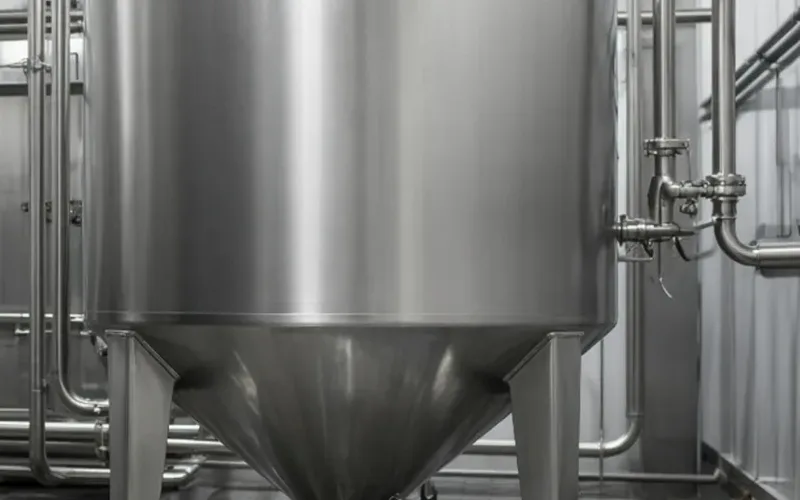
Sanitary Exchangers
Integral
The panel is the tank wall: a welded jacket with a polished product face and a fraction of the media volume.
+ Learn More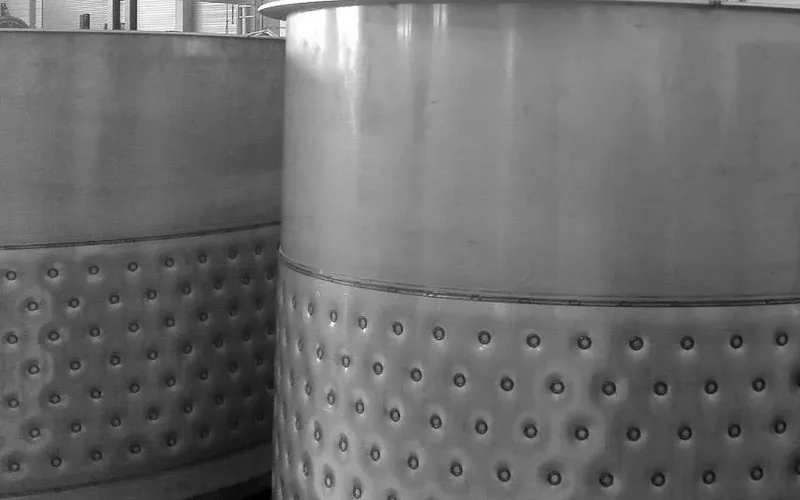
Sanitary Exchangers
Embossed Plate
Two stainless sheets welded and inflated into a heat transfer surface that goes wherever the tank needs it.
+ Learn More