
1-805-484-2992
Quotes - Engineering - SalesSteam you can put on the product side
Plant steam carries boiler treatment chemicals, iron and whatever the condensate return picked up. It cannot touch a product-contact surface in a pharmaceutical plant and is limited to culinary grade with filtration in a food plant. Clean steam is made from purified, RO or WFI-quality water in a generator that is itself a sanitary heat exchanger: a double tubesheet reboiler with plant steam on the tube side and feedwater boiling on the shell side, delivering steam at 30 to 45 psig whose condensate meets the water it was made from. That steam sterilizes equipment in place at 250 F (121 C) for 30 minutes, feeds the sterile barriers on valves and pump seals downstream of the sterile hold on an aseptic line, and can be injected directly into product as culinary steam.
Aseptic processing is the reason most of that steam exists. Once a product has passed the sterile hold on a UHT or aseptic line, every joint, seal, valve stem and instrument connection between the hold and the filler is a place where non-sterile air or water can reach it, and each one is protected by a steam barrier: a small flow of clean steam through a chamber around the seal, kept at or above 250 F and monitored. The heat exchangers on the sterile side, the coolers and regenerators, are built so their utility side cannot leak inward and so the whole product path can be steamed and held before the run.
Request a Quote
Peak SIP demand, not holding load, sizes the clean steam generator
Heating a 2,000 liter bioreactor and its lines to 250°F draws 300 to 500 lb/h, against 50 to 100 lb/h at hold. Plant steam at 60 to 100 psig in the tubes boils feedwater on the shell into dry steam at 30 to 45 psig.
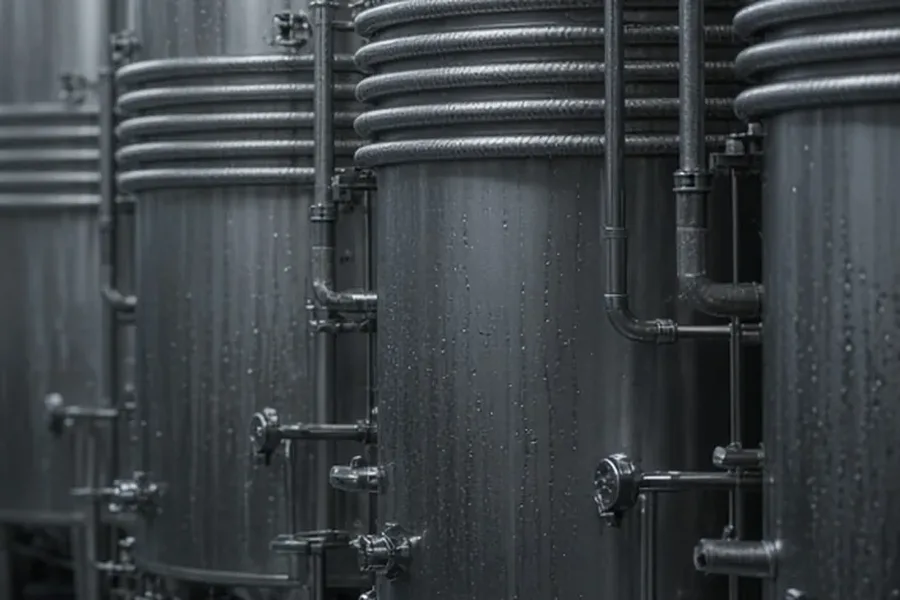
Clean steam generator
- Feedwater from PW, RO or WFI; conductivity and chloride limits stated
- Plant steam in the tubes, clean steam boiled on the shell, double tubesheet
- Sized on peak SIP demand, 100 to 3,000 lb/h, with simultaneous users
- Dryness, non-condensable and superheat tested to EN 285 where specified
- 316L, electropolished shell side, blowdown and level control
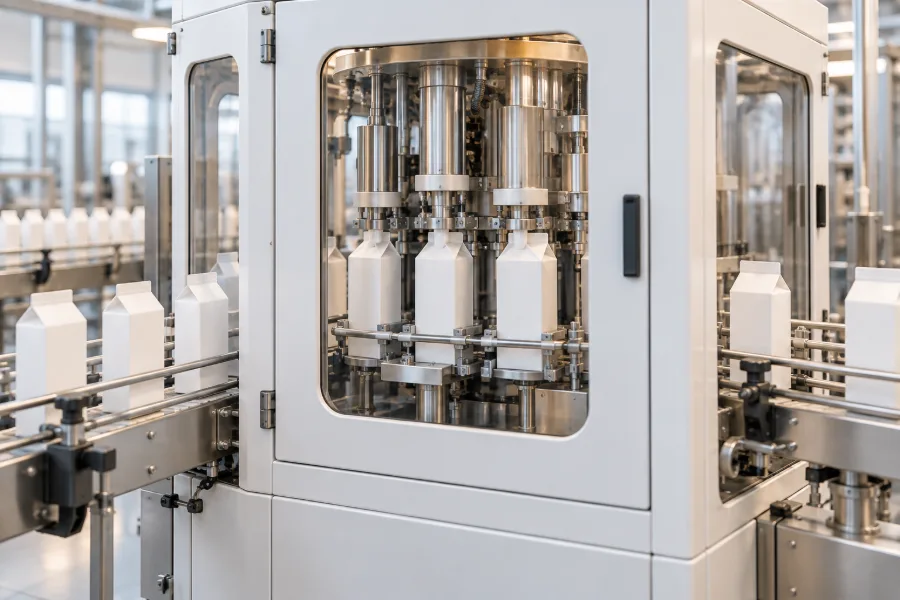
Aseptic-side exchangers and barriers
- Coolers on sterile condensate or with steam barriers on utility connections
- Regenerator sterile side at higher pressure than raw side
- Every seal downstream of the hold protected by a monitored steam barrier
- Whole product path steamed at 250 F for 30 minutes before the run
- Instrument and drain connections short and sloped, no dead legs
Recommended construction by clean steam and aseptic duty
The generator is a reboiler and the aseptic exchangers are double tubesheet units; the rows say which geometry fits each duty.
| DUTY / CONDITION | RECOMMENDED CONSTRUCTION | WHY |
| Clean steam for SIP, barriers and culinary injection, 100 to 3,000 lb/h | Clean Steam Generator | Double tubesheet U-tube reboiler on plant steam with level control, blowdown and quality-tested output |
| Sterile-side product cooler on an aseptic or UHT line | Double Tubesheet | Tower or chilled water cannot reach sterile product through a single joint; gap is vented and monitored |
| Sterile-against-raw regenerator on an aseptic line | Double Tubesheet | Same construction, with the sterile side held at higher pressure and a differential switch on the section |
| Aseptic heater for thin products where plates are wanted | Double-Wall Plate | Double-wall plates give the separation on a shorter cycle; rated for SIP at 250 F with the right gaskets |
| Aseptic heater for viscous or particulate products | Single Tube-in-Tube | Large bore, no gaskets in the product path, steams and drains reliably; the aseptic standard for sauces and purees |
| Condensing clean steam from vents and barriers for sampling or recovery | Vapor Condenser | Sanitary condenser on the steam quality test point and on barrier steam vents |
How the generator and the aseptic exchangers are designed
A clean steam generator is sized on the peak demand, which is nearly always a sterilize-in-place cycle: heating a vessel or a line from ambient to 250 F takes several times the steam that holding it there does, and if two SIP cycles can run at once the generator sees both. A 2,000 liter bioreactor with its transfer lines takes on the order of 300 to 500 lb/h during heat-up and 50 to 100 lb/h at hold; a UHT line's product path is similar. The generator is a U-tube reboiler with plant steam in the tubes at 60 to 100 psig, feedwater on the shell held by level control, and a separator or a tall shell that delivers dry steam at 30 to 45 psig. The double tubesheet keeps plant steam condensate out of the clean steam; blowdown controls the shell-side concentration of whatever the feedwater brought in.
Feedwater quality is the generator's whole specification. Purified water is standard; RO permeate is acceptable for food and many pharmaceutical duties if its chloride is low, because chloride concentrates in the shell and attacks the tubes; WFI feed is used where the condensate must itself be WFI. Steam quality is tested at the point of use for dryness fraction, non-condensable gas and superheat, to EN 285 or the site's equivalent, and the generator is built with the sampling condenser and the test points to do it.
Aseptic exchangers on the sterile side of a line are designed on one question: what happens at every wall and every seal if it fails. The product side runs at higher pressure than the utility side wherever the utility is not sterile, so a leak flows outward. Coolers run on sterile condensate from the clean steam system or carry steam barriers on their utility connections so that a leak at the connection meets steam rather than tower water. Regenerators between sterile product and raw product use a double tubesheet and a monitored pressure differential. Every product connection downstream of the hold carries a steam-in-place valve arrangement so the whole path can be steamed at 250 F for 30 minutes before the run and every seal can be barriered during it.
250 F for 30 minutes, then hold it there
Culinary steam for direct injection
Direct steam injection into product, for UHT, for cooking or for deaerator heating, uses culinary steam: in a food plant that is plant steam made with approved chemicals and filtered to 5 microns, and in a pharmaceutical or a premium food plant it is clean steam from a generator. The generator sized for injection sees a steady load rather than an SIP peak and is usually smaller than the SIP generator on the same site.
Steam barriers in practice
A barrier is a chamber around a valve stem or pump seal fed with clean steam at 30 to 45 psig and drained through a trap, with a temperature switch that alarms below 250 F. On a filler there may be thirty of them, each a few pounds per hour, and their total is added to the generator load. The condensate from barriers is not returned; it goes to drain through the trap and an air gap.
Food versus pharmaceutical aseptic
Aseptic food lines for juice, dairy and sauces follow the low-acid canned food rules on hold time and validation and use culinary steam and 3-A sanitary construction. Pharmaceutical aseptic processing adds clean steam from purified water, ASME BPE finish and documentation, and a sterile-side design reviewed by the quality group. The exchangers are the same families; the specification is stricter.
What to send for a quote
For a generator: peak steam demand with simultaneous users, delivery pressure, feedwater type and conductivity, plant steam pressure, and the quality test the site requires. For aseptic exchangers: product and flow, temperatures, utility available, SIP conditions, and the barrier and instrumentation the line's validation plan calls for. Call and talk it through with an engineer: 1-805-484-2992
Common FAQs
Clean and pure steam are made from purified or WFI-quality water in a sanitary generator and their condensate meets a water monograph; pure steam usually means WFI-quality condensate. Culinary steam is plant steam made with FDA-approved chemicals and filtered for direct food contact.
Size on the heat-up of the largest vessel or line, plus any cycle that runs at the same time, plus the barriers. Heat-up is three to five times the hold load. HeatX sizes from vessel volumes, line lengths and the SIP schedule.
It can be steamed at 250 F and held; its utility side cannot leak inward, by pressure relationship, sterile utility or steam barrier; every seal downstream of the sterile hold is barriered; and it drains completely. Sanitary construction is the starting point, not the whole answer.
Yes. Plant steam condensate carries boiler chemicals and iron; the double tubesheet is what keeps it out of the clean steam if a tube joint weeps. HeatX builds the generator with a vented gap as standard.
Related
Applications
High-Purity Water
RO, DI and demineralized water heated, cooled and tempered in metal that the water cannot take with it.
+ Learn More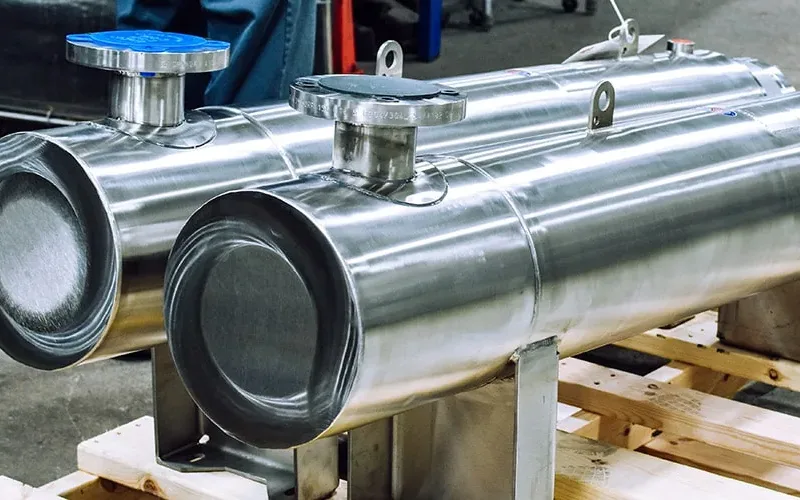
Applications
CIP Systems
Supply heaters that bring caustic to 170 F in the time the cycle allows, built for 2 percent caustic and acid.
+ Learn More
Applications
Water & Utility
The exchangers behind the process: high-purity water, CIP supply, clean steam and aseptic sterile barriers.
+ Learn More