
1-805-484-2992
Quotes - Engineering - SalesThe Envelope Is What the Piping Cares About
A replacement that does the duty but lands two inches short of the product line is not a replacement, it is a piping job. The envelope, meaning the overall dimensions, the connection sizes, types and locations, and the mounting, is what lets the new unit go in over a weekend. It is measured in an hour with a tape, a caliper and a camera, and the measurements below are the ones that decide whether the unit drops in or the fitter gets involved.
Measure from fixed references: the face of a ferrule, the centerline of a nozzle, the bolt hole of a foot. Photograph each measurement with the tape in frame. Where the old unit is buried in insulation, measure the connections and the feet and give the shell size from the nameplate or from the exposed heads.
On a sanitary shell-and-tube, measure
- Shell outside diameter, and whether the shell is jacketed or insulated
- Overall length from face to face of the tube-side connections, and of the shell-side connections
- Tube-side connection type and size: tri-clamp ferrule size, bevel seat, I-line, or flange
- Shell-side connection type and size, and whether they are on the same side or opposite sides
- Distance from each connection centerline to the nearest foot or saddle
- Foot or saddle spacing, bolt pattern, and height from floor to shell centerline
Bevel-seat fittings can still be matchedOld dairy fittings that look like tri-clamp but do not mate with it are identified from a caliper reading, and the new unit either carries them or the piping is adapted.
On a Plate Unit and a Tube-in-Tube
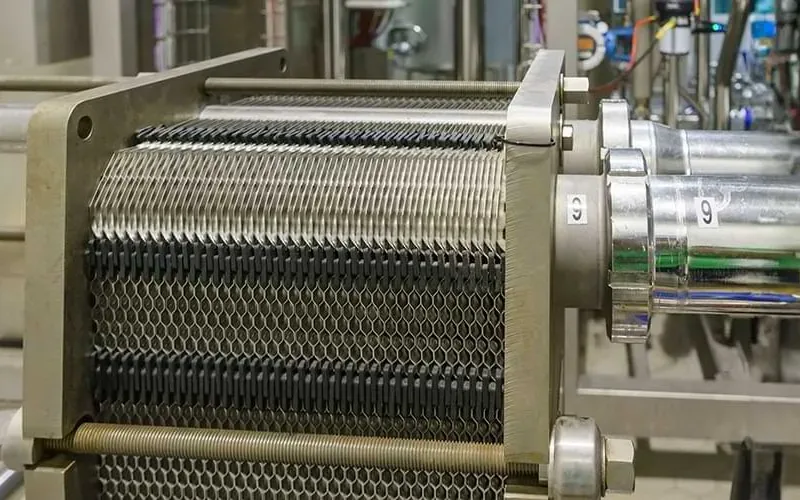
A gasketed plate replacement is matched on the plate envelope and the frame. Measure a single plate: height, width and the port centerline dimensions, both directions. Count the plates, and read the maximum plate count off the frame nameplate if it is there. Measure the frame length between the fixed plate and the movable plate with the pack compressed, the overall frame length including the tie bolts, and the port size and type on the fixed plate. Note which ports are product and which are utility, and whether any ports are on the movable plate.
A tube-in-tube replacement is matched on the module. Measure the inner tube outside diameter and count how many inner tubes share a jacket, the jacket OD, the straight length of a module, the number of modules and how they are stacked, and the product and jacket connection sizes at each end. Note whether the return bends are welded or removable, because removable bends are how the unit is inspected.
- Plate: plate height and width, port centers, port size and type, plate count, frame length compressed and overall
- Plate: frame max plate count, gasket compound, product and utility port assignment, foot bolt pattern
- Tube-in-tube: inner tube OD and count, jacket OD, module length, module count and stacking, connection sizes
- Tube-in-tube: return bend type, mounting frame footprint, product inlet end
- Either: overall length, width and height as installed, and the clear space around the unit for opening it
Measure from fixed references and put the tape in every photograph.
- A 2 inch tri-clamp ferrule flange measures 2.516 inches
- Face-to-face length between product connections decides the drop-in
- Foot spacing, bolt pattern and floor to shell centerline
Getting the New Unit Onto the Old Piping
Connections are where most replacement problems live. Tri-clamp ferrules are standardized by nominal size, so a 2 inch ferrule mates with a 2 inch ferrule from any source, but the nominal size is not the outside diameter of the ferrule: a 2 inch tri-clamp ferrule measures 2.516 inches across the flange. Measure the flange OD with a caliper and read the size from a table, or read it off the clamp. Bevel-seat and I-line fittings on older dairy equipment look similar and do not mate with tri-clamp; identify them, and decide whether the replacement should carry the old fitting type or the piping should be adapted.
Utility connections are less critical than product connections and more often mismatched. A steam inlet on the old unit may have been a 2 inch NPT that the plant welded a flange onto; a hot water loop may come in on a grooved coupling. Measure and photograph what is actually there, not what the drawing says, and tell us which utility connections you would rather have changed. Often the replacement is the moment to put the steam inlet where the trap wants it.
Overall length between the product connections is the dimension that fixes whether the unit drops in. On a shell-and-tube it is set by the tube length plus the heads, and a new unit with a slightly longer bundle for more duty can still match it by using a shorter head or a different connection orientation. On a plate unit it is the frame, and a frame with a higher maximum plate count can be supplied at the same foot spacing. Tell us the length you have to hit and how much room there is beyond it in each direction.
Mounting is measured from the floor. Foot bolt pattern, foot spacing along the shell, and the height from the floor or skid to the shell centerline determine whether the existing anchor bolts and the existing piping elevations are reused. Saddles on a horizontal shell-and-tube and a base frame on a plate unit are both adjustable within limits; a vertical unit hung from a bracket is matched on the bracket. Note whether the unit sits on a skid with other equipment, because then the skid drawing is the reference.
Orientation and flow direction are the two things that a photo settles and a tape does not. Which end the product enters, which side the utility enters, whether the unit drains toward the product outlet or needs a low-point drain, and whether the heads face the aisle for bundle removal. A replacement mirrored end for end is a common and avoidable mistake; a photograph with the product inlet labelled prevents it.
Two judgment calls come up repeatedly. First, whether to match the old envelope exactly or to size the new unit for the current duty and adapt the piping. Where the line has grown, a longer or larger unit with a short piping change usually costs less over its life than a same-size unit that is short on capacity. Second, whether to keep an old connection type. Bevel-seat fittings on a 1970s pasteurizer can be matched, but the moment the plant has a tri-clamp standard everywhere else, the replacement is the time to convert and the adapters are cheap.
Send the measurements as a marked-up photo or a sketch with the numbers on it, and the connection photos with a tape or a clamp in frame. A dimensioned drawing comes back for approval showing the new unit's connections, overall dimensions and mounting laid over what you sent, and nothing is built until it is confirmed. Call and talk it through with an engineer: 1-805-484-2992
A replacement that lands two inches short of the product line is not a replacement, it is a piping job.
Request a QuoteCommon FAQs
Connection sizes to the sixteenth of an inch or with a caliper on the ferrule flange; overall length and foot spacing to the eighth of an inch; shell OD to the nearest quarter inch is enough since standard sizes are well separated. Photographs with the tape in frame catch most errors.
Yes, within the room you have. A longer bundle, a taller frame or an extra tube-in-tube module adds duty at the same connections. Tell us how much room there is beyond the current envelope in each direction.
Yes, or the replacement can be supplied with tri-clamp ferrules and adapters to the existing bevel-seat piping. Most plants use the replacement as the point to convert to their current fitting standard.
Measure the heads and the connections, read the shell size from the nameplate, and give the insulated OD. The connection centerlines and overall length matter more than the bare shell diameter for fitting the unit.
Related
Sizing & Selection
Look Up by Manufacturer & Model
Read the nameplate, identify the construction, and get a matched sanitary replacement.
+ Learn More
Sizing & Selection
What to Send Us
The checklist that turns a replacement request into a priced, drawn, matched unit without a call back.
+ Learn More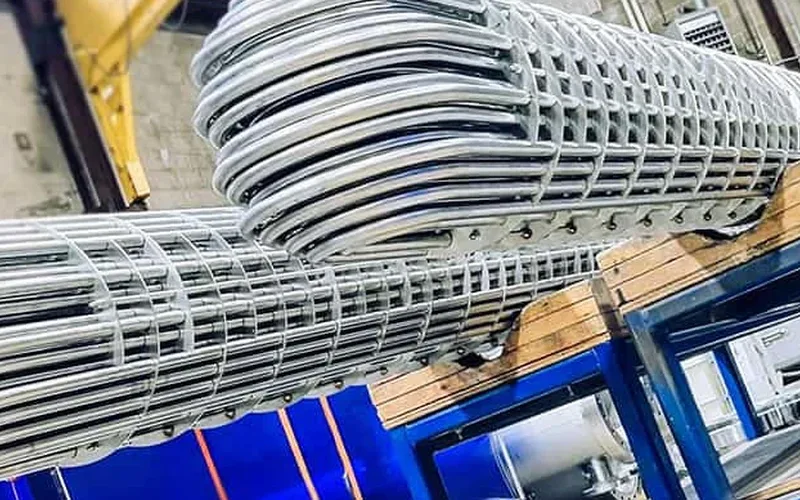
Sizing & Selection
Replace Your Exchanger
Look up the unit you have, match it by dimensions and connections, and send us the nameplate.
+ Learn More