
1-805-484-2992
Quotes - Engineering - SalesFour processes, one set of exchangers
Brewing, winemaking and distilling share a family of heat exchangers with the rest of the beverage world but ask different things of them. A brewery needs wort brought from the kettle at 212 F to yeast pitching temperature in a single pass, and needs the heat recovered into the hot liquor tank. A winery needs must cooled to 45 to 50 F for cold soak and warmed to 60 to 85 F to start fermentation, with skins and seeds in the flow. A distillery needs mash cooled to fermentation temperature, spirit vapor condensed, and a dephlegmator that sets the reflux ratio in a column. Every one of them runs a caustic and acid CIP for hop resin, tartrate or beerstone.
The exchangers are gasketed plate for wort, clear beer and cooling water; wide-gap plate or tube-in-tube for must and mash with solids; sanitary shell-and-tube condensers on the vapor side of a still; and steam-to-water sets that feed the hot liquor and the still jackets. Because the fluids are acidic and the cleaning is aggressive, product-side material is 316L on anything that touches wine, spirit or hop-heavy wort.
Request a Quote
Knockout time sets the flow; the hot liquor tank gets the heat
Brewing water takes wort from 212°F to 75 to 85°F and leaves at 170 to 180°F for the next mash. Glycol at 28°F then finishes to 50 to 55°F for lagers or 65 to 68°F for ales in one pass.
Wort chiller
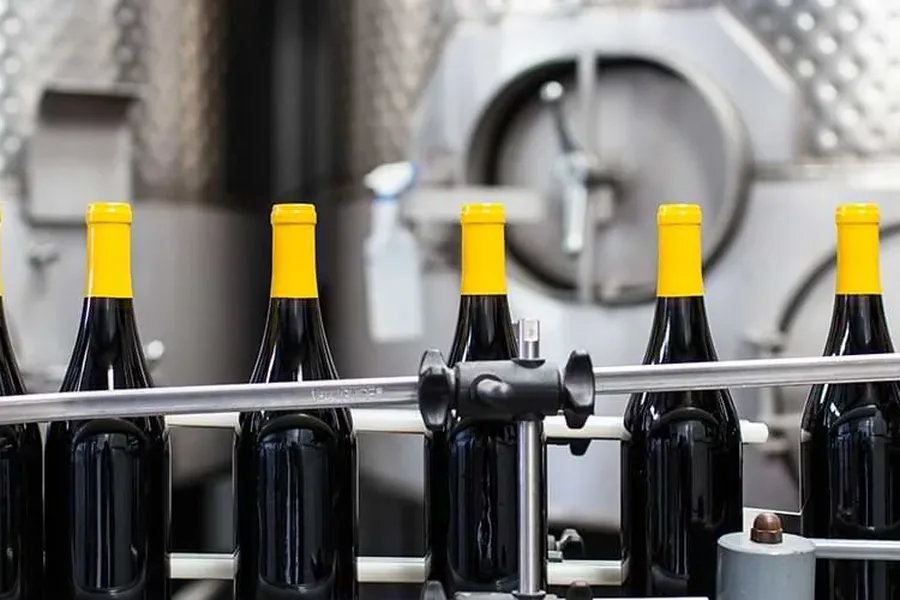
- Two stages in one frame: city or brewing water, then glycol
- 212 F to 50 to 55 F lager or 65 to 68 F ale in one pass
- Knockout in 30 to 60 minutes sets the flow rate
- Hot liquor recovered at 170 to 180 F for the next mash
- 316L plates, EPDM gaskets, opens for hop-resin inspection
Still condenser and dephlegmator
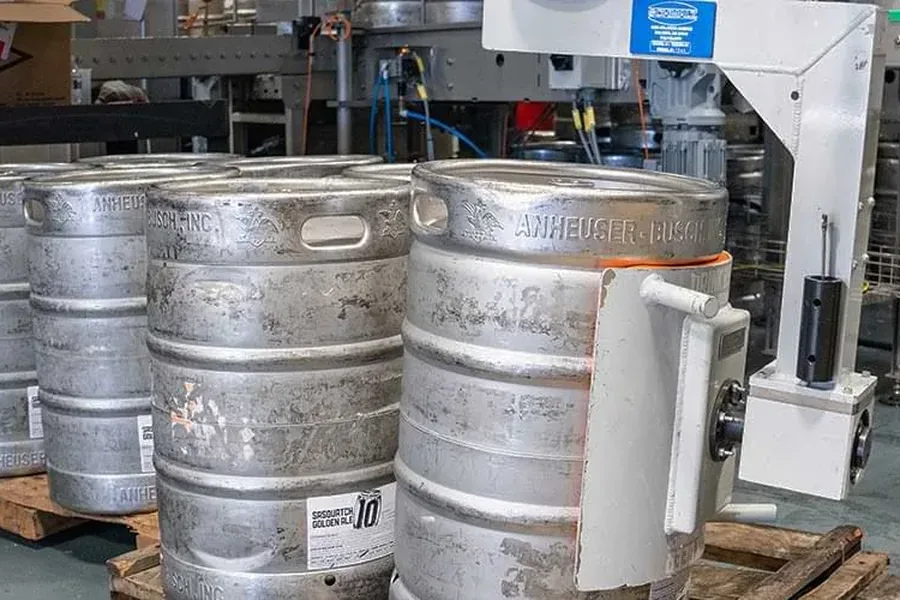
- Vapor rate from the still's boil-up sets the surface
- Vertical shell-and-tube, vapor in tubes, water on shell
- Dephlegmator sized to the reflux ratio, water flow throttled
- Product cooler brings spirit from 170 F to 70 F for collection
- Copper or 316L tubes by the distiller's flavor preference
Recommended construction by brewery and distillery duty
Plates where the fluid is clear and the pressure is low, tubes where there are skins, seeds and grain, and shell-and-tube where there is vapor.
| DUTY / CONDITION | RECOMMENDED CONSTRUCTION | WHY |
| Wort cooling, 212 F to pitching temperature, 10 to 300 bbl brewhouse | Gasketed Plate | Two sections in one frame recover the heat into hot liquor and finish on glycol; opens for hop-resin cleaning |
| Wine must cooling and heating with skins and seeds | Wide-Gap Plate | Doubled gap passes seeds and skin fragments; regeneration against water is still practical |
| Whole-cluster or heavy-skin must, cider pomace, fruit mash | Single Tube-in-Tube | Large bore, no plate ports to block; brushable after a red harvest |
| Distillery mash cooling with grain-in, 2 to 4 inch solids | Multi-Tube | Parallel tubes carry grain-in mash at low velocity; no gaskets to catch husks |
| Spirit condenser, dephlegmator, beer still vapor | Vapor Condenser | Sanitary shell-and-tube built for vapor duty: vented, drained, sized on boil-up rate and non-condensables |
| Hot liquor, still jacket and CIP hot water from plant steam | U-Tube | Steam-to-water set; free expansion, removable bundle, feeds every hot water user in the brewhouse |
Wort cooling, wine must, distillation and mash
Wort cooling is a fixed-time problem. The kettle holds 10 to 300 barrels and the brewer wants it knocked out in 30 to 60 minutes, so the flow rate is the batch divided by that time and the exchanger is sized on it. The first stage on brewing water at 55 to 65 F takes the wort from 212 F to 75 to 85 F and heats the water to 170 to 180 F, which is the next brew's hot liquor; the second stage on propylene glycol at 28 F finishes to 50 to 55 F for lagers or 65 to 68 F for ales. Getting through 160 F to pitching quickly keeps wild yeast and bacteria from establishing, drives off dimethyl sulfide, forms a good cold break and holds late-hop aroma, which is why a single-pass chiller beats a jacketed tank for every brewery above pilot scale.
Wine must is a solids problem. Crushed grapes carry skins, seeds and pulp, and cold soaking red must at 45 to 50 F for several days before fermentation, then warming it to 60 to 85 F to start the yeast, means an exchanger that passes seeds without blocking. Wide-gap plates do it for most must; whole-cluster or heavily extracted must goes through a tube-in-tube with a 2 inch bore. White juice after pressing is clear and runs on standard plates to 45 to 50 F for settling. Tartrate scale from the acid step and pigment from red skins mean the CIP program is caustic, acid, then a citric rinse, and the product side is 316L.
Distillation is a vapor problem. A pot still or column boils at a rate set by the steam or heat input, and the condenser has to take every pound of that vapor plus the non-condensables to liquid at the collection temperature. The condenser is a vertical shell-and-tube with vapor in the tubes and cooling water on the shell, vented at the top and drained at the bottom, sized on the boil-up rate at the lowest cooling water temperature the plant sees. A dephlegmator is the same construction placed at the top of a column and run with throttled cooling water so that part of the vapor refluxes; its surface area sets the maximum reflux ratio, so it is sized generously and controlled by water flow. Copper tubes are chosen by distillers who want sulfur removal; 316L by those who want a neutral spirit.
Mash in a distillery is thick with grain. Cooling grain-in mash from 150 F to 85 F for fermentation runs through a multi-tube or single tube-in-tube at low velocity with hot water recovered on the utility side. A wash cooler after the beer still is a plate exchanger because the wash is clear by then. Every distillery also runs a steam-to-water U-tube set that feeds still jackets, mash tun heating and CIP; sizing it on the coincident peak is what keeps the second still from starving the first.
Wort, must, mash and vapor: what each one needs
Heat recovery to hot liquor
A 30 barrel brewhouse cooling wort from 212 to 80 F on the water stage moves about 1.2 million Btu into the hot liquor tank every brew. If the brewery runs two brews a day, that is the equivalent of roughly 1,400 lb/h of steam the boiler never makes. The exchanger is sized so that the water stage alone lands the hot liquor at 170 to 180 F and the tank is big enough to hold it until the next mash-in.
Beer and cider cooling and pasteurizing
Finished beer is chilled to 30 to 32 F for cold crash and filtration on a plate cooler with glycol, deaerated water is chilled for blending, and flash pasteurization for bottled beer or cider runs 160 to 165 F for 15 to 30 seconds on a plate pasteurizer with regeneration, followed by a cooler to fill temperature. Carbonated product is held at pressure through the exchanger so the CO2 stays in solution.
CIP in the brewhouse and cellar
Hop resin and protein on the wort side, beerstone in the cellar, tartrate in the winery and sugar films in the still house all come off with 1 to 2 percent caustic at 160 F followed by an acid step and a sanitizer. Plate exchangers open twice a year for gasket inspection; tube-in-tube units are brushed after each harvest. The CIP pump head is often higher than the process pump's, so the exchanger design pressure covers it.
Quote checklist
Brewery: batch size, knockout time, wort out temperature, brewing water temperature, glycol temperature. Winery: must flow and solids, cold soak and fermentation temperatures, chiller capacity. Distillery: still type, boil-up rate or steam rate, cooling water temperature, reflux ratio, product collection temperature. Call and talk it through with an engineer: 1-805-484-2992
Common FAQs
Two, above about 5 barrels. A single stage on glycol works but spends refrigeration on heat the brewing water would have taken for free and gives you no hot liquor. Two stages on one frame cost little more than one.
Wide-gap plates pass seeds and skin fragments; single tube-in-tube at 2 inch bore passes whole-cluster must. Standard plates block at the inlet ports within a shift on red must.
On the vapor rate from the still's heat input at the lowest cooling water temperature and a target spirit outlet temperature, with allowance for non-condensable venting. HeatX sizes it from the still's steam rate or kettle heater rating.
Copper removes sulfur compounds and many distillers want it in the condenser or the dephlegmator; 316L gives a neutral spirit and cleans easier. Both are available on the vapor condensers HeatX quotes.
Related
Applications
Juice & Beverage
Pasteurize at 185 to 195 F, hot fill at 180 F or cool to 40 F, with pulp in tubes and clear product on plates.
+ Learn More
Applications
Sauces & Particulates
Tube-in-tube and multi-tube exchangers, bore chosen for the biggest piece and velocity for the slowest one.
+ Learn More
Applications
Liquid Egg
Whole egg, white, yolk and blends pasteurized ten degrees below where they cook, then cooled to 40 F.
+ Learn More