
1-805-484-2992
Quotes - Engineering - SalesOne tube, one annulus, the biggest particle you have
A single tube-in-tube module is exactly what the name says: one product tube, typically 1-1/2" to 4" OD, centered inside a jacket tube by spacers, with the utility flowing in the annulus around it. The product path is a straight bore from ferrule to ferrule with a sanitary return bend at each end of the module. There is no place for a particle to catch and no channel narrower than the tube, so the largest piece the process handles sets the tube size and everything else follows.
That is why single-tube modules carry whole strawberries, peach and pear halves, diced vegetables, beans, pasta, rice, meat and poultry pieces in sauce, and the long fibers in some plant-based products. It is also the module of choice for very viscous pastes where a single large bore keeps pressure drop within reach of a positive displacement pump.
The single tube gives up surface per foot of bank compared with a multi-tube module, so banks are longer for a given duty. For the products it is chosen for, that length is the price of a process that never plugs.
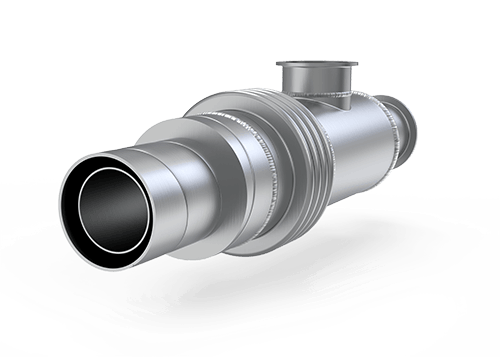
If it goes through a 3" ferrule it goes through the exchanger, and it comes out the other end the same shape it went in.
Single tube-in-tube for whole fruit, diced product and gentle heating of pieces in sauce.
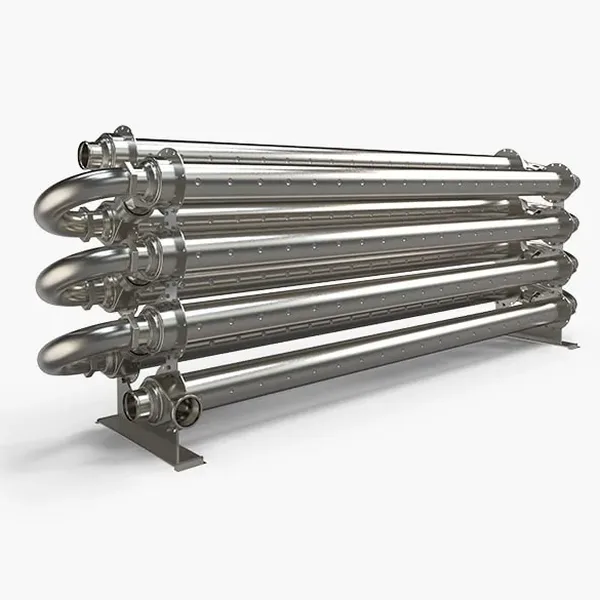
The largest open bore
- Straight bore from ferrule to ferrule, no catch points
- Whole fruit halves and diced pieces keep their shape
- Tube sized so largest piece is a third of bore
- Generous return bends protect delicate pieces
- Pastes run at a pressure drop the pump can deliver
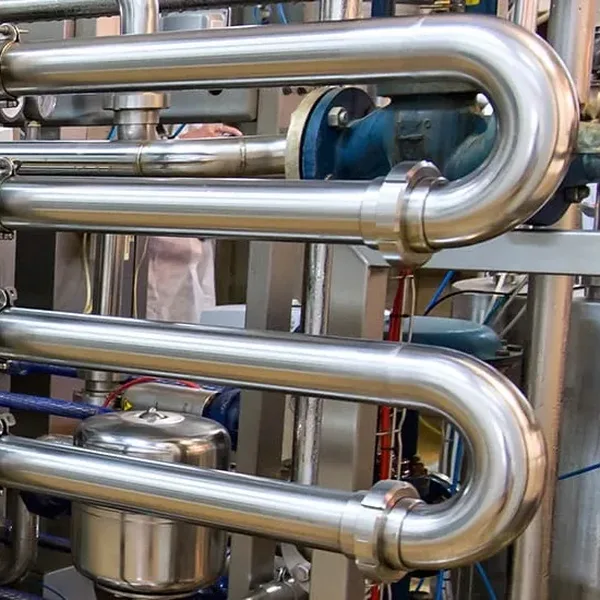
Inspect the tube, not just swab
- Inner tube draws out of jacket on most sizes
- Direct visual and profilometer check of product surface
- Allergen changeovers confirmed by sight, not swab alone
- Removable tri-clamp return bends, same bore as tube
- Banks drain by gravity at the lowest bends
Built To




Single tube-in-tube, typical sanitary build
The rows give the standard single-tube build, with bore, jacket and module arrangement chosen for open product flow. Your product, viscosity and temperatures decide which row changes, so include them in the quote request.
| Feature | Detail |
| Product tube OD | 1-1/2", 2", 2-1/2", 3" or 4"; 1" for viscous product without pieces |
| Product tube finish | 32 Ra standard; 20 Ra or electropolished on request |
| Jacket | Next larger pipe or tube size, annulus set for 3 to 6 ft/s utility velocity |
| Module length | 10 to 20 ft typical; banks of 4 to 20 modules |
| Return bends | Sanitary tri-clamp U-bends, removable; same bore as the product tube |
| Inner tube | Removable from the jacket on most sizes for inspection |
| Design pressure | 150 psig standard; several hundred psi on the product tube |
| Design temperature | 350 F and higher; steam on the jacket routine |
| Materials | 304L or 316L product tube; 304L jacket standard |
| Codes | ASME U-stamp on the jacket as required, 3-A conformance, PED, CRN |
Using single tube-in-tube modules well
Particulate handling and velocity
Pieces in a carrier fluid must move fast enough to stay suspended and slow enough that they are not damaged at the return bends. For most fruit and vegetable pieces that window is about 2 to 4 ft/s in the product tube. The tube diameter is set so the largest piece is no more than roughly one-third of the bore, which prevents two pieces from bridging in a bend, and the return bend radius is kept generous for the same reason. Heat transfer to the piece itself is by conduction from the carrier, so the holding tube after the exchanger is sized on the center temperature of the largest piece rather than on the carrier temperature. Bores, jacket arrangements and pressure ratings are detailed on our tube-in-tube design pages.
Viscous pastes and pressure drop
Pastes and thick purees run laminar in a large single tube, and the coefficient is low; the compensation is a long bank at a pressure drop the pump can deliver. A 2" tube passes a very viscous product at a fraction of the pressure a 1" tube would need, so the tube is often chosen for hydraulics first and the bank length adjusted to make the duty. Where the length becomes awkward, the corrugated tube page shows how a spiral wall raises the coefficient without narrowing the bore.
- Tube diameter chosen for pump pressure, then length for duty
- Laminar coefficient rises with velocity and length
- Wall temperature kept close to product to avoid scorching
- Positive displacement pumps standard on viscous banks
Removable inner tubes and inspection
On most single-tube sizes the jacket is built with a gland or a sanitary closure at one end so the inner tube can be drawn out. That allows direct visual and profilometer inspection of the product surface, replacement of a tube damaged by an upstream event, and a look at the utility side of the tube for scale. Plants running allergen changeovers value the ability to confirm the product tube is clean by looking at it rather than by swab alone.
Bank layout, drainage and expansion
Modules are stacked vertically on a stainless frame and connected by return bends so the product path snakes from the top to the bottom, with each module pitched slightly toward its downstream bend. Drains at the lowest bends empty the bank by gravity after the final rinse. The utility is piped in counterflow so it enters at the product outlet end. Each module's jacket carries an expansion element or one free end so the inner tube can grow when steam is applied to a cold bank; that is checked on the drawing for the actual temperature range rather than assumed.
For pieces, fibers and pastes the single tube is the simplest sanitary exchanger there is, and simplicity is what keeps it running. Call and talk it through with an engineer: 1-805-484-2992
Common FAQs
Start with the largest particle: the bore should be about three times its size so pieces do not bridge. For pastes with no pieces, pick the diameter that keeps pressure drop within the pump's capability at the coldest viscosity. The bank length is then set for the thermal duty.
Not at the velocities the sizing uses. Straight bores, generous return bends and 2 to 4 ft/s are gentle on soft fruit. Damage usually happens at the pump, not in the exchanger, and the pump selection is part of the conversation.
Yes. Unjacketed lengths of the same tube and return bends are added after the heating bank to provide the hold time, sized on the center temperature of the largest particle and on the fastest particle rather than the average velocity.
On most sizes, yes; the jacket has a closure at one end that releases the product tube. Very long modules or those with fixed jackets at both ends are inspected by borescope through the ferrules instead.
Steam gives the most heat per foot and is common for cooking. Hot water is used where wall temperature must stay close to product temperature to prevent scorching or protein fouling. The jacket is rated for either.
Related
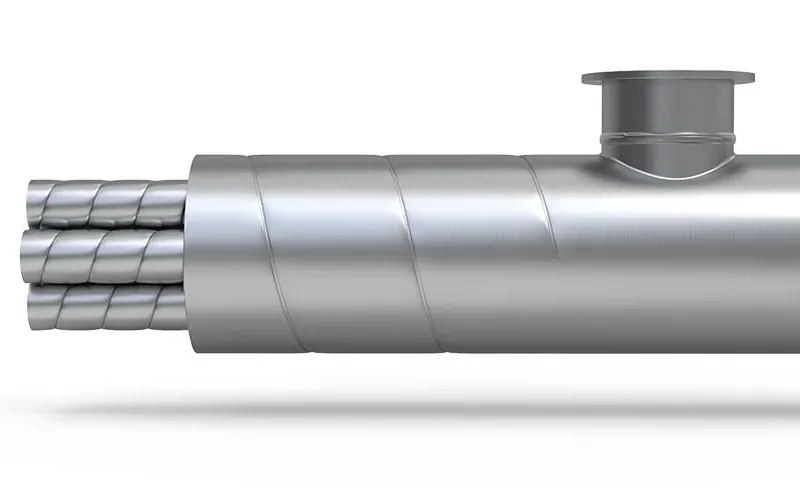
Sanitary Exchangers
Multi-Tube
Several product tubes in one jacket: tube-in-tube handling with several times the surface per foot.
+ Learn More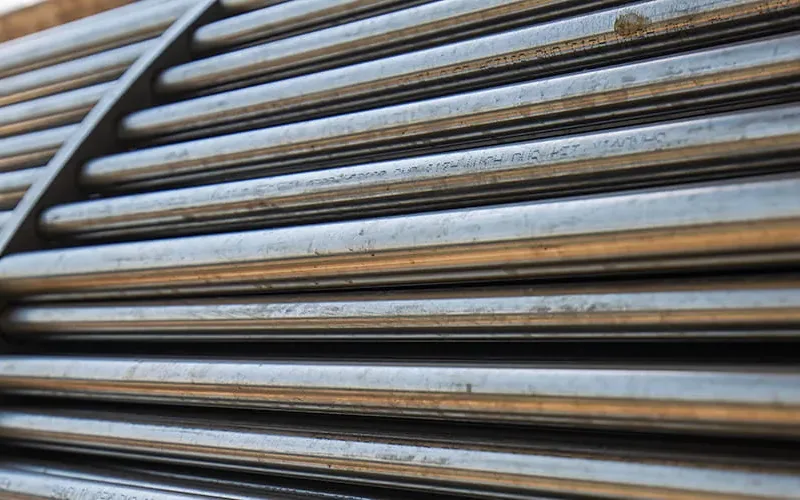
Sanitary Exchangers
Corrugated Tube
A spiral pressed into the product tube turns laminar product turbulent without narrowing the bore.
+ Learn More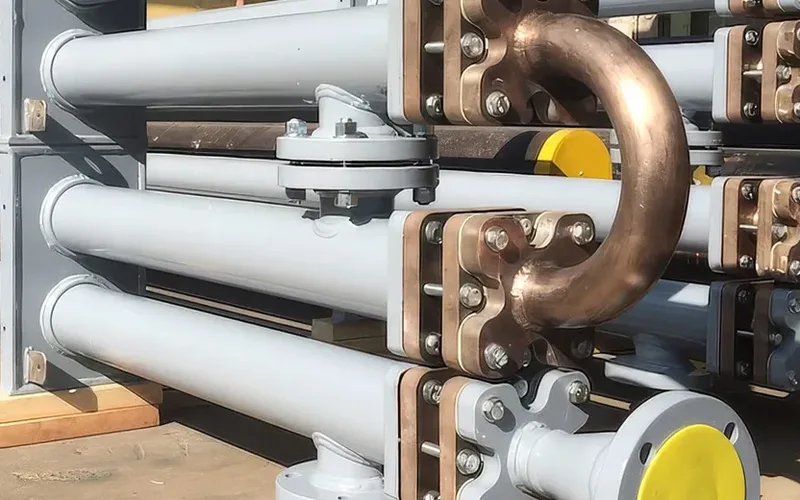
Sanitary Exchangers
Tube-in-Tube
One straight product tube inside a jacket: nothing to plug, nothing to bridge, and full counterflow.
+ Learn More