
1-805-484-2992
Quotes - Engineering - SalesPulp is the first question
Beverage lines split cleanly on one property: whether the product has solids. Clear apple juice, tea, coffee extract, sports drinks, flavored water, sugar syrup and filtered wine all run on a gasketed plate pasteurizer with regeneration exactly as fluid milk does. Orange juice with pulp, mango and guava nectar, smoothies, vegetable juice and anything with fiber above 1/16 inch runs in a tube-in-tube or wide-gap plate where the solids have room and the plate gasket corners are not there to catch them.
The thermal job is the same for both: heat to 185 to 195 F, hold 15 to 30 seconds to inactivate pectin methylesterase and spoilage organisms, then either send the product to a hot filler at 180 to 185 F or cool it to 40 F for cold aseptic or cold-fill packaging. Hot fill uses the product's own heat to sterilize the container, so the pasteurizer cooler is small or absent; cold fill puts the whole cooling load on the exchanger and the regeneration section pays for itself in the first year.
Request a Quote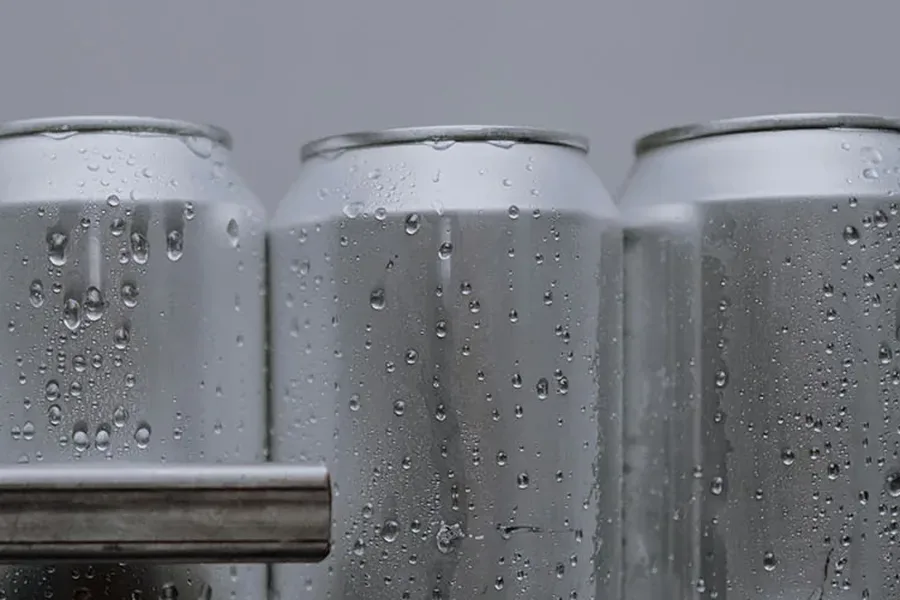
Pulp decides plate or tube; the filler decides the cooler
Clear juice runs on plates at 90 percent regeneration; fiber above 1/16 inch goes to corrugated tube, 1 to 1-1/2 inch bore. Hot fill at 180 to 185°F needs only a trim cooler; cold fill to 40°F makes the glycol cooler the largest section.
Clear beverage pasteurizer
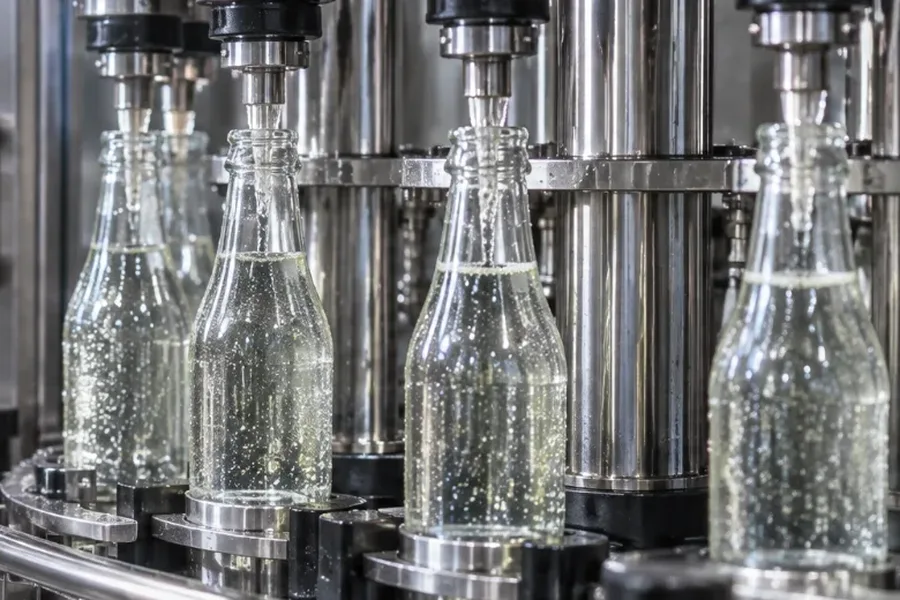
- Plates with regeneration to 90 percent
- 185 to 195 F, 15 to 30 second sloped holding tube
- Hot water set at 5 degree approach on plant steam
- Cooler on tower water then glycol for cold fill
- 316L plates, EPDM or nitrile gaskets by flavor system
Pulp and nectar pasteurizer
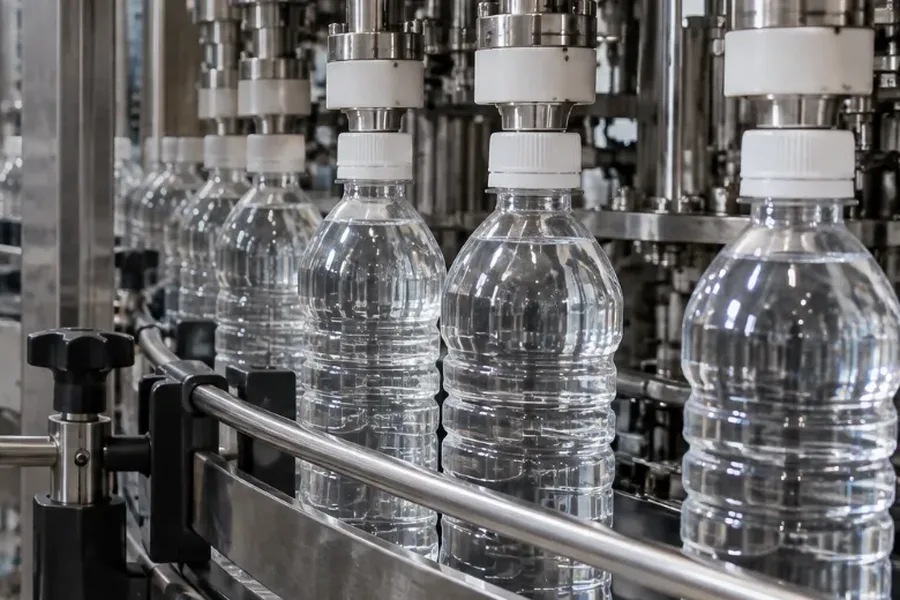
- Corrugated tube-in-tube, 1 to 1-1/2 inch product bore
- Tubular regenerator, product against product
- Velocity 3 to 5 ft/s to keep pulp suspended
- Removable inner tube for inspection on citrus
- No gaskets in the product path except tri-clamp seals
Recommended construction by beverage duty
The solids content picks the family; the fill method sizes the cooler; the utility available decides how the hot side is fed.
| DUTY / CONDITION | RECOMMENDED CONSTRUCTION | WHY |
| Clear juice, tea, coffee, sports drinks, syrups: pasteurize and cool | Gasketed Plate | Regeneration to 90 percent on a water-like fluid; opens for inspection at flavor changeover |
| Orange juice with pulp, nectars, smoothies, vegetable juice | Corrugated Tube | Pulp passes a tube bore it would never pass a plate gap; corrugation keeps the coefficient and scours the wall |
| Juice with cells, fruit bits or seeds to 1/4 inch | Single Tube-in-Tube | Large single bore, no parallel paths to maldistribute, brushable |
| Cloudy juice and light pulp where the plant wants a plate frame | Wide-Gap Plate | Doubled gap passes light fiber; regeneration nearly as good as standard plates |
| Syrup dissolving and cooling, 60 to 67 Brix | U-Tube | Steam on tube side for the dissolver; viscous syrup on the shell side at low pressure drop |
| Evaporative concentration of juice before storage or shipping | Evaporator | Falling film or forced circulation sanitary evaporator at low temperature to hold flavor |
Sizing a juice pasteurizer
A juice pasteurizer is sized from the product outlet backwards. On a hot-fill line the product leaves the holding tube at 190 F, drops to 180 to 185 F in a trim cooler and goes straight to the filler, where its own heat pasteurizes the bottle and cap during the inversion hold. The exchanger is a regenerator, a heater and a small trim section. On a cold-fill or aseptic line the product has to leave at 40 F or below, and the cooler is now the largest section on the frame: regeneration recovers 85 to 90 percent, tower water takes the product to 90 or 95 F and glycol at 28 F finishes to 40 F.
The hold is the second design fact. Fifteen seconds at 185 F is enough for microbial kill in most high-acid juices; 30 seconds at 195 F is what inactivates pectin methylesterase in citrus so that cloud stays stable in the bottle. The holding tube is sized on the fastest particle, and for pulpy juice in laminar flow that particle can move at twice the mean velocity, so citrus tubes are longer than clear-juice tubes at the same nominal hold.
Fouling in juice is sugar and pectin, not protein. It builds on any wall above about 175 F, it is soft, and it comes off with 1.5 percent caustic at 170 F followed by a rinse to clarity. Apple juice with high fructose caramelizes on a hot wall, so the hot water approach on the heater is held to 5 degrees and the product velocity above 3 ft/s. Tea and coffee extract leave tannin films that need a periodic acid step.
Hot fill, cold fill and the size of the cooler
Deaeration and dissolved oxygen
Most juice lines deaerate before the pasteurizer to protect vitamin C and color. A vacuum deaerator strips air at 100 to 120 F, and the product has to be warmed to that temperature first; that preheater is usually the first pass of the regeneration section. Flash losses of aroma from the deaerator are condensed and returned, which is a small sanitary vapor condenser on chilled water.
Syrup rooms and sweetener
Sugar dissolving at 60 to 67 Brix runs at 150 to 180 F on a steam-heated U-tube or plate exchanger with a large hot-side margin because syrup viscosity at 60 Brix and 70 F is 50 to 60 cP and climbs fast as it cools. The syrup is then cooled to 70 to 80 F for blending, and sweetener from a tanker at 100 F is cooled the same way. Both are duties where a wide plate gap or a shell-side syrup pass avoids a channeling problem.
Carbonated and functional beverages
Carbonated drinks are chilled to 34 to 38 F before the carbonator so the CO2 dissolves; that is a plate cooler on glycol at high flow and small duty. Energy drinks and vitamin waters are pasteurized like clear juice and often hot filled. Kombucha and cold brew coffee are cooled after brewing and rarely pasteurized, which makes them a plate cooler on chilled water with a CIP program that handles caffeine and acid films.
What to send for a quote
Product with Brix, pH and a note on pulp or particle size, flow, inlet temperature, pasteurization temperature and hold, hot fill or cold fill, outlet temperature, and the steam, hot water, tower water and glycol available. From that a pasteurizer or cooler is a firm quote in a day. Call and talk it through with an engineer: 1-805-484-2992
Common FAQs
Tube-in-tube for anything with pulp or cells, because pulp lodges at plate gasket corners and in the narrow inlet ports. Not-from-concentrate juice with pulp removed can run on wide-gap plates. Clear apple, grape and white cranberry run on standard plates.
185 to 195 F for 15 to 30 seconds is typical for high-acid juice; 195 F for 30 seconds for citrus where pectin methylesterase must be inactivated. Low-acid juices such as carrot go higher and are treated as aseptic products with their own validation.
Juice is acidic and often carries chloride from water treatment or brine on the plant floor. At 190 F that combination pits 304, particularly at welds. 316L on the product side is standard for juice at HeatX.
With 90 percent regeneration on plates, heating 100 gpm of juice from 40 to 190 F takes roughly 1,200 lb/h of steam for the last 15 degrees; without regeneration it would be about 12,000 lb/h. That is the whole case for the regeneration section.
Related
Applications
Sauces & Particulates
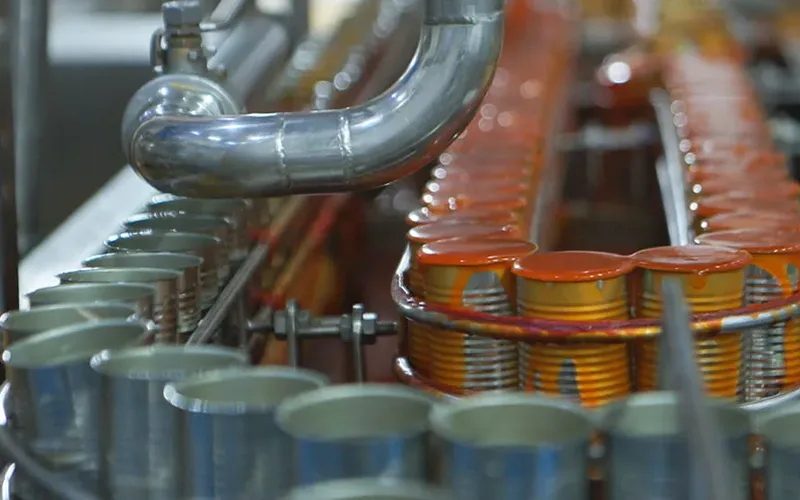
Tube-in-tube and multi-tube exchangers, bore chosen for the biggest piece and velocity for the slowest one.
+ Learn More
Applications
Brewery & Distillery
Wort chillers, must coolers, mash coolers, still condensers and dephlegmators for brewing and distilling.
+ Learn More
Applications
Liquid Egg
Whole egg, white, yolk and blends pasteurized ten degrees below where they cook, then cooled to 40 F.
+ Learn More