
1-805-484-2992
Quotes - Engineering - SalesExtended shelf life, cooling side
The cooling train sets the shelf life
Once ESL product leaves the hold at 250 to 260 F it has to reach 38 F before the filler without picking up anything on the way. The heating side kills organisms; the cooling side is where they get back in if the design lets them. A cooler sized for heat transfer alone hits 38 F on day one and loses two weeks of shelf life to a regenerator leak or a utility barrier never fitted.
The train is three exchangers in series: a regenerator, a water stage, and a glycol stage for the last 15 to 20 degrees. Each has its own barrier question.
Three stages, three different risks
Stage one: regeneration against raw product
Treated product at 255 F enters the regenerator and leaves near 100 F, lifting raw product from 40 F to about 200 F across the wall. That recovers roughly 70 percent of the heat the line put in. It is also the one stage where the fluid across the wall is raw product, so a wall failure puts organisms straight into the treated stream.
Two things keep that from mattering. The treated side is held 15 to 30 psi above the raw side by the back pressure valve, so a leak goes treated-to-raw and is heated again downstream. And the wall is doubled: a double tubesheet with a vented gap so a failed joint weeps outside, or a double-wall plate pack. HeatX quotes the double tubesheet as standard on ESL regenerators; the single-wall plate with a booster pump is an HTST answer, legal but not the practice on a 60 day product.
Stage two: water cooling
From 100 F to 55 or 60 F on tower water in summer or chilled water year-round. The risk here is the utility: tower water is not clean and chilled loops carry biocide. A single wall between treated milk and tower water is not acceptable, so the water stage is either double tubesheet or its utility connections carry a steam barrier so any leak path passes through 250 F steam.
Sized on tower water for August at 85 F it still lands the product at 95 F, which is why most ESL lines run the second stage on chilled water. Every degree taken here is cheaper than a degree in glycol.
Stage three: glycol to 36 to 38 F
The last 20 degrees are on food-grade propylene glycol at 25 to 28 F. Glycol at that temperature is 6 to 8 cP with a worse film coefficient, so this stage has 25 to 40 percent more area per degree than the water stage and its glycol flow runs 1.5 to 2 times the product flow. The target depends on the filler: 38 F to a carton filler, 36 F where product sits in a surge tank first.
Freeze-up at the wall is the design limit. Milk starts freezing near 31 F; glycol at 20 F against 36 F product at low flow puts the wall below that, and a frozen film in a tube is a plugged tube. HeatX sizes the glycol stage so the wall stays above 32 F at the lowest product flow.
The common mistake
Building the cooling train out of standard HTST cooler sections because the duty numbers look the same. What is missing is the pressure hierarchy and the second wall. An HTST cooler need not be above its chilled water pressure, because its milk is consumed in 14 days. On an ESL line the same leak is a 60 day product with a 20 day shelf life and a recall meeting. The ESL cooler is specified from the barrier inward, then sized for heat.
Send the product and flow, the temperature leaving the hold, the outlet the filler needs and the water and glycol available. Call and talk it through with an engineer: 1-805-484-2992




ESL cooling process conditions
These rows follow the product from the hold outlet through regeneration, water and glycol, with the pressure and barrier arrangement each stage needs. Match them to your filler target and send your own temperatures with the quote request.
| Condition | Detail |
| Product | ESL milk, creamers, flavored milk, plant-based drinks leaving the hold |
| Flow range | 3,000 to 40,000 lb/h, matched to the heating train |
| Temperatures in / out | 255 F in; 100 F after regeneration; 55 to 60 F after water; 36 to 38 F after glycol |
| Hold | None; treated side kept at the higher pressure throughout |
| Utility | Raw product; tower or chilled water; propylene glycol at 25 to 28 F |
| Approach | 10 to 15 degrees on regeneration; 8 to 10 on water and glycol |
| Construction | Double tubesheet or double-wall plate regenerator; straight tube or plate water and glycol stages |
| Finish / class | 3-A, 316L, 20 to 25 Ra treated side, welded product path |
| Pressure | Treated side 15 to 30 psi above raw and utility, held by the back pressure valve |
| CIP | One circuit with the heater; utility connections steam-barriered |
Common FAQs
Chilled water at 34 F cannot get product below about 40 F economically, and 38 F or lower is what the shelf life claim depends on. Glycol takes the last 15 to 20 degrees.
The regenerator, yes, because raw product is across the wall. The water and glycol stages need either a double tubesheet or a steam barrier on the utility connections.
36 to 38 F at the filler. Every degree above 40 F costs measurable days on a 60 day product, a stronger argument for the glycol stage than the energy cost is against it.
On thin milk the water and glycol stages can be double-wall plate, and some plants prefer them because they open. The regenerator with a 255 F inlet is tubular because gaskets do not last there.
Related
Applications
ESL Heating
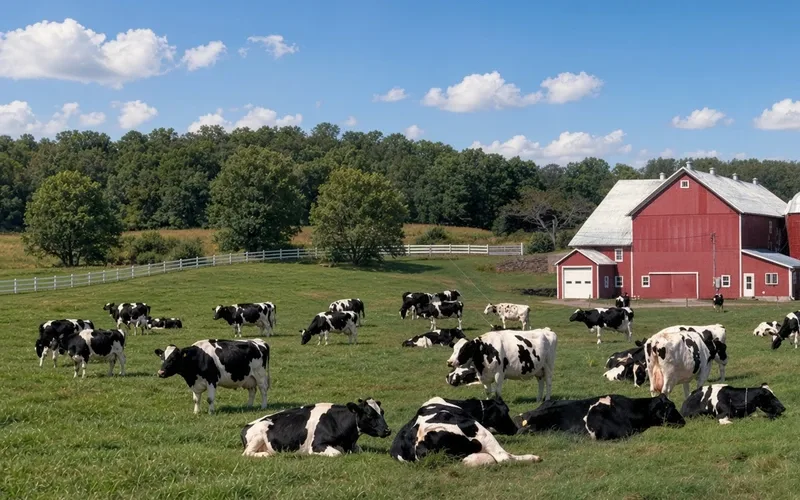
Preheat, hold, then the last lift to 250 to 260 F on pressurized hot water, on a wall protein cannot stick to.
+ Learn More
Applications
UHT Direct vs Indirect
Steam into the milk or milk against a hot wall: how the two routes to 285 F differ in flavor, fouling, energy.
+ Learn More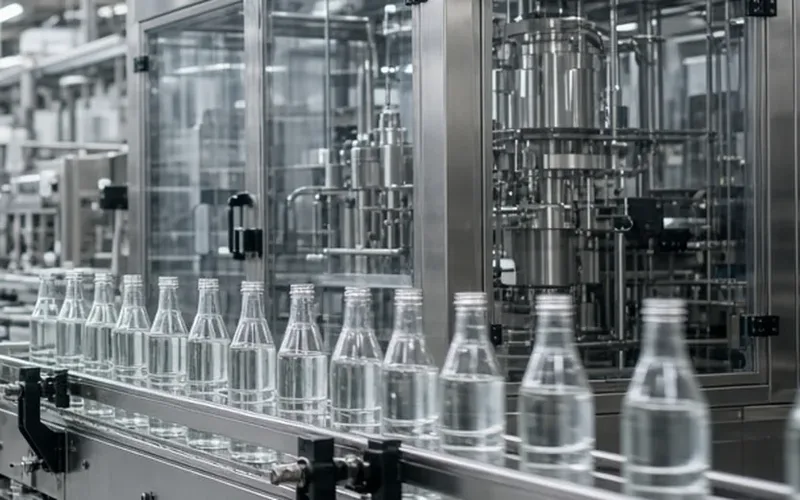
Applications
Aseptic Cooling & Filling
From the sterile hold to the aseptic tank and filler: coolers sterilized with the line that stay sterile.
+ Learn More