
1-805-484-2992
Quotes - Engineering - SalesLow-temperature heat transfer
What changes when the cold side goes below zero
Chilling a solvent to -40 F is not a colder version of chilling it to 40 F. Every fluid on the cold side has a viscosity that climbs steeply toward its freezing point, and its film coefficient falls with it. A 60 percent propylene glycol solution that works at 20 F is syrup at -45 F, and an exchanger sized on water-side correlations delivers a third of its duty. Add a surface below the freezing point of water and the wax point of the extract, and the design has three problems a water duty never has.
This page is the physics under the CBD and Cannabis pages: the cold-side fluid, the wall, the ice, and what a cold flammable liquid asks of the installation.
The cold fluid, the wall, the ice and the installation
Choosing the fluid on the cold side
Propylene glycol at 55 to 60 percent is usable to about -40 F, where it is 80 to 150 cP and needs two to three times the area of a water duty. Potassium formate brine reaches -60 F at 10 to 15 cP, gives coefficients four to five times better at -40 F, and is the usual upgrade; it attacks zinc and aluminum, which keeps it out of some chillers. Silicone and hydrofluoroether fluids reach -100 F and stay thin, at a higher price per gallon. HeatX sizes the same exchanger on each fluid the plant is considering so the choice is made with numbers. Where the solvent is boiled off and returned, the vent and knock-back condensers are covered on our knock-back condenser pages.
Freeze-out on the wall
The wall runs at a temperature between the two fluids, weighted toward the side with the better coefficient. With glycol at -50 F and ethanol at -20 F the wall sits near -40 F, and anything in the ethanol that solidifies above that comes out on it. Water is first: 190 proof ethanol stays liquid, but as it picks up moisture from biomass it drifts toward a composition that forms ice crystals, and they plate the wall; waxes in miscella follow. A layer 0.02 in thick halves the duty. The fix is a wall no more than 10 to 15 F below the solvent target, which means a tempered cold side rather than the coldest fluid the chiller can make, and a channel a solid layer can slough out of: tube-in-tube or wide-gap plate on miscella, a conventional plate only on clean solvent.
Icing, contraction and the blocked-in liquid
A bare exchanger at -40 F in a 70 F room grows an inch of frost a day that insulates it and drips into everything below. The unit, its headers, valves and the first several feet of pipe get closed-cell foam with a sealed vapor barrier; a plate exchanger is boxed in insulated panels. Stainless contracts about 0.1 in per 10 ft between 70 F and -40 F, taken up by pipe offsets and a U-tube bundle or floating head. And solvent blocked in between two closed valves at -40 F that warms to room temperature raises its pressure by hundreds of psi; a small relief valve on the solvent side of any exchanger that can be isolated cold is required.
The common mistake
Sizing at the mean temperature. Glycol is 20 cP at the inlet at -30 F and 100 cP at the outlet at -45 F, and a rating run at the average sees 50 cP and an exchanger 40 percent short at the cold end where the last degrees are made. The cold end is rated at the cold end's viscosity, in zones, and the last 10 F of ethanol cooling takes as much surface as the first 60. Plants that skipped this reach -30 F, never -40 F, and blame the chiller.
Send the solvent, its water content, flow and target temperature, and the chiller fluid and outlet temperature, and HeatX rates the exchanger zone by zone. Call and talk it through with an engineer: 1-805-484-2992



Solvent chilling process conditions
Solvent chilling depends on the fluid, the coldest temperature you need and the area rating of the site. Check these rows against your process, then send the solvent, target temperature and classification with the quote request.
| Condition | Detail |
| Product | Ethanol, isopropanol, heptane, hexane or acetone |
| Flow range | 5 to 100 gpm solvent; cold-side flow 2 to 3 times the solvent flow |
| Temperatures in / out | 70 F in, -20 to -40 F out; -60 to -80 F on hydrocarbon and some pharmaceutical crystallizations |
| Hold | None; solvent is held cold in an insulated tank or run straight to the process |
| Utility | Propylene glycol to -40 F at the limit; potassium formate, silicone or hydrofluoroether fluids to -80 F |
| Approach | 8 to 12 F on glycol; 4 to 6 F on a low-viscosity fluid |
| Construction | Gasketed plate on clean solvent; tube-in-tube or shell-and-tube on solvent with solids or wax |
| Finish / class | 316L product side, 32 Ra; gaskets in a fluoroelastomer or PTFE-faced EPDM rated for the solvent and the temperature |
| Insulation | 2 to 3 in closed-cell foam with a vapor barrier over exchanger, headers and valves |
| Safety | Grounded, bonded, drained; relief on the solvent side; C1D2 or better |
Common FAQs
At the limit. It works with a generous exchanger and high glycol flow, but pump power and area are roughly double what a formate brine needs. Below -40 F it is out.
Almost always because the cold end was rated at an average viscosity; the last 10 F needs more surface than the rating gave it.
A low-temperature fluoroelastomer grade or PTFE-faced EPDM, depending on the solvent. Standard EPDM stiffens and leaks below about -20 F; nitrile swells in ethanol.
Plate on clean solvent; tube-in-tube on anything carrying wax, water or solids that will freeze onto the wall.
Related
Applications
CBD Extraction
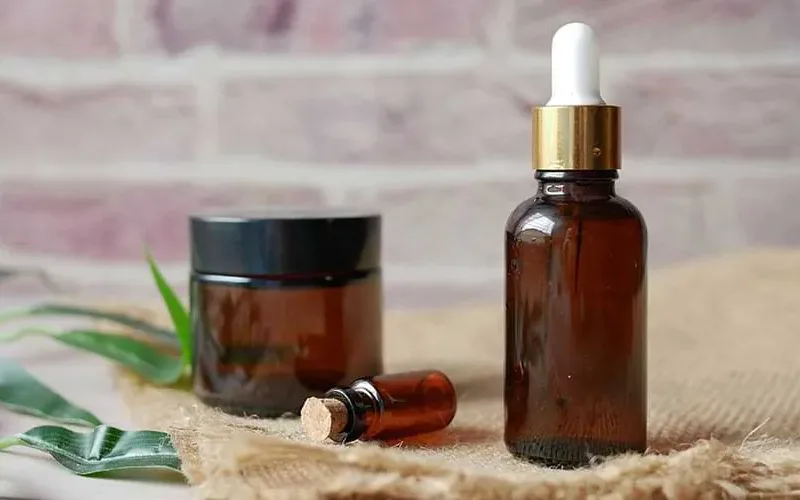
Cold ethanol in, crude out, solvent back to the tank: the four exchangers on a hemp line and how each is sized
+ Learn More
Applications
Cannabis
Hydrocarbon, ethanol or CO2: the solvent decides the exchangers, the area classification decides the skid.
+ Learn More
Applications
Bioreactor Jacket Control
Jacket water at 37 C, held to a tenth of a degree, by a heater and a cooler that never touch the culture.
+ Learn More