
1-805-484-2992
Quotes - Engineering - SalesWhere the culture works
One degree matters here more than anywhere else in the dairy
Yogurt cultures work between 104 and 115 F and work best in a band about 5 degrees wide. Too cool and the set takes six hours instead of four; too warm and the culture makes acid faster than flavor. The exchangers around incubation are control problems first: a cooler that stops the mix at 110 F, a tank jacket that holds a 10,000 pound batch within a degree for four hours, and a starter vessel that runs a heat treatment and back down to culture temperature.
The parent page covers the mix pasteurizer and shear on the cooled product. This page stays with the culture.
The cooler, the tanks and the starter
The tempered-water cooling section
Mix leaves the 190 F hold and has to be at 110 F, plus or minus a degree, at the incubation tank. Regeneration takes it to about 130 F; the last 20 degrees are the difficult ones. Chilled water at 34 F against a 110 F target is a 76 degree driving force, and a 5 percent valve swing moves the outlet several degrees. Tempered water at 95 to 100 F makes it 10 to 15 degrees, and the same swing moves the outlet a fraction of a degree.
The tempered water is a small loop with a three-way valve blending chilled water in. HeatX sizes the section at a 3 to 5 degree approach, more plates than chilled water would need, and the outlet holds 110 F through flow changes and fouling drift. Sour cream and buttermilk at 72 to 75 F run the same section on 65 to 68 F water.
- Tempered water at setpoint minus 10 to 15 degrees
- Outlet sensor in the product line driving the three-way valve
Incubation tank jackets
Set yogurt incubates in the cup; stirred yogurt incubates in a tank. The jacket does little heating, since the mix arrives at temperature; its job is to hold 110 F against room losses for four hours without stirring. A dimpled jacket on tempered water at 108 to 112 F holds the batch within a degree. A jacket on 34 F chilled water would cool the wall product to 60 F while the center was still 110 F, and the two would set differently.
The cool-down after incubation is gentle: 60 to 70 F water in the jacket, the batch dropping 10 to 15 degrees over 30 to 60 minutes before it is pumped to the product cooler. The full yogurt line, from mix preparation to filling, is on our yogurt processing page.
Bulk starter vessels
The bulk starter grows in its own jacketed vessel: medium heated to 195 F, held 30 to 60 minutes to destroy phage, cooled to 100 to 110 F, inoculated, incubated 12 to 16 hours, then chilled to 40 F until metered into the mix. The jacket does all of that on hot water and then chilled water, in an automated sequence.
The duties are small; the vessel is 50 to 500 gallons. What matters is sterility: the vessel and jacket are steamed between batches, the vent has a sterile filter and the ports have steam barriers, because a contaminated starter contaminates every batch it seeds.
The common mistake
Cooling the mix to culture temperature on the chilled water section that cools everything else. It saves a section of plates and a loop, and on the first batch the operator trims the valve and lands 110 F. Then the flow changes or the heating section fouls, and the mix enters the tank at 104 F on one batch and 116 F on the next, and the texture wanders with it. The plant blames the culture supplier. The tempered section costs less than one lost batch.
Send the mix solids and flow, the culture temperature, the tank sizes and whether the starter is bulk or direct-set. Call and talk it through with an engineer: 1-805-484-2992




Culture and incubation process conditions
These are the conditions the mix cooler, the tank jackets and the starter vessel are sized to. Send your own figures with the quote request and the sizing starts from the right numbers.
| Condition | Detail |
| Product | Yogurt mix at 14 to 16 percent solids; sour cream and buttermilk mix; bulk starter medium |
| Flow range | Mix cooler 5,000 to 30,000 lb/h; tanks 2,000 to 20,000 lb; starter 20 to 500 gallons |
| Temperatures in / out | Mix 190 F to 108 to 113 F; sour cream to 72 to 75 F; starter 195 F to 105 F |
| Hold | Incubation 3 to 5 hours to pH 4.5; starter 12 to 16 hours |
| Utility | Tempered water at 95 to 100 F on the final cooler; hot and chilled water on tank jackets |
| Approach | 3 to 5 degrees on the tempered section; outlet within 1 degree |
| Construction | Gasketed plate with a tempered section; dimpled tank jackets; jacketed starter vessels |
| Finish / class | 3-A, 316L, 32 Ra; EPDM gaskets; jackets ASME rated |
| Pressure | Product 100 psig; jackets 75 to 100 psig |
| CIP | Mix cooler with the pasteurizer; tanks after each batch; starter vessel steamed |
Common FAQs
108 to 113 F for standard thermophilic cultures, some as low as 104 F. Sour cream, buttermilk and cream cheese cultures are mesophilic and set at 70 to 75 F.
Control. A 10 to 15 degree driving force holds the outlet within a degree through flow and fouling changes; a 76 degree driving force swings it several degrees on a small valve movement.
Barely. The mix arrives at temperature; the jacket holds it against room losses for three to five hours and then cools it 10 to 15 degrees before the break, on tempered water, never on chilled water directly.
A steam-sterilizable design: vessel and jacket rated for steaming, a sterile vent filter, steam-barriered ports, and an automated sequence through heat treatment, cooling, incubation and chilling.
Related
Applications
Cheese Milk Heating
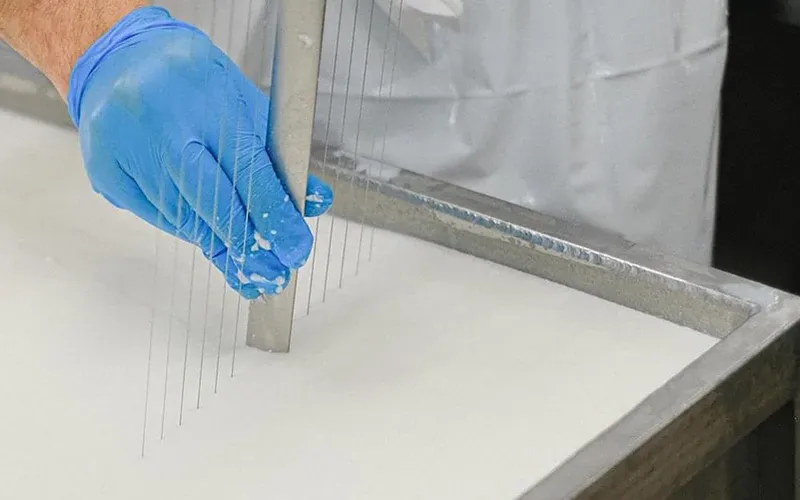
Thermized, pasteurized or raw, the milk reaches the vat at 88 to 90 F within a degree, on tempered water.
+ Learn More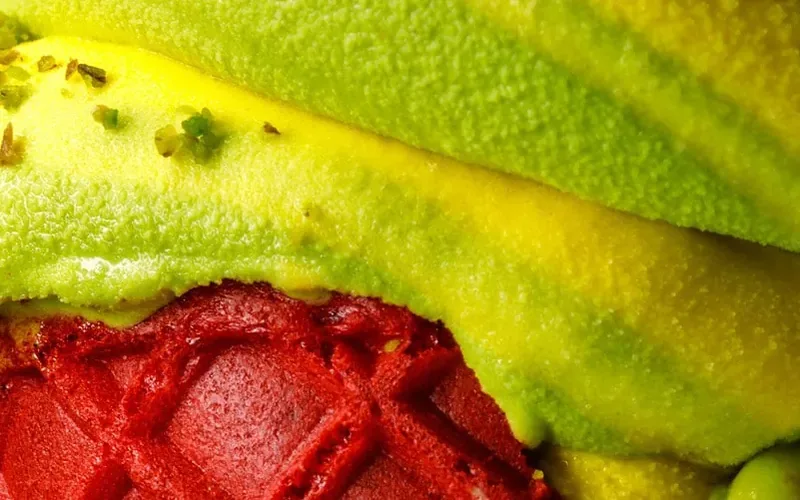
Applications
Ice Cream Mix
38 to 40 percent solids, pasteurized at 175 F for 25 seconds, homogenized hot and cooled to 40 F for aging.
+ Learn More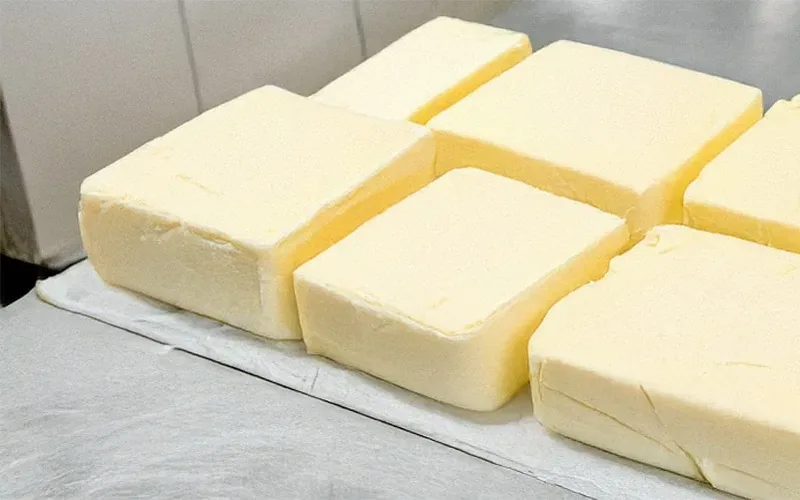
Applications
Butter & Milk Fat
Cream ripened and tempered for the churn, anhydrous milk fat heated and cooled without water, ghee cooked.
+ Learn More