
1-805-484-2992
Quotes - Engineering - SalesHarvest, crush and fermentation
The exchanger that runs eight weeks a year, hard
Wine must is crushed grapes: juice plus 7 to 23 percent by weight of skins, seeds and, on whole-cluster fruit, stems. It arrives at the crusher at whatever the vineyard's afternoon temperature was, often 80 to 95 F, and the winemaker wants it at 45 to 50 F for a cold soak or at 60 to 85 F to start fermentation, within the hour. The solids and the two-month harvest set everything about the exchanger.
This page covers the must chiller at the crusher, the loop exchangers that hold a cold soak and warm a stuck ferment, and juice cooling after the press.
Three winery duties and the exchanger for each
Must chilling at the crusher
The must chiller is the largest exchanger in the winery and it runs at the pace of the crusher. Red must from a 20 ton per hour destemmer-crusher is about 100 gpm, and taking it from 90 F to 48 F on glycol at 28 F is roughly 2 million Btu/h. The exchanger runs an 8 to 12 degree approach so the glycol never has to go below 28 F and freeze juice on the plates.
Solids decide the construction. Wide-gap plates with a channel of 1/4 inch pass seeds and skin fragments from a normal crush and give the best coefficient. Whole-cluster must for carbonic maceration, heavily extracted must and anything with stems runs in a single tube-in-tube with a 2 to 3 inch bore at 1.5 to 3 ft/s, where nothing can bridge and the tube can be brushed after a red harvest.
Cold soak and fermentation control
A cold soak holds red must at 45 to 50 F for two to seven days before the yeast is added, extracting color and aroma without alcohol. When the tank jacket cannot keep up, a recirculation loop through a wide-gap plate or tube-in-tube on glycol takes the load. The same loop on hot water at 100 to 120 F warms the must to 60 to 65 F to start the yeast or rescue a stalled ferment.
Active fermentation is exothermic, and a 10,000 gallon red ferment at its peak makes heat at a rate that would raise the tank 4 to 6 degrees a day. Reds are held at 75 to 85 F and whites at 50 to 60 F, and a loop exchanger on glycol keeps an undersized jacket's ferment on its curve. Hot water rather than steam on the warming side keeps the wall under 130 F, where must starts to cook.
White juice after the press
White grapes are pressed before fermentation and the juice, still cloudy with pulp but free of seeds, is chilled to 45 to 50 F for cold settling over 24 to 48 hours, then racked off the lees. That is a gasketed plate exchanger on glycol at ordinary channel width, the cleanest duty in the winery.
Juice at pH 3.2 with sulfite added at the crusher is corrosive enough to pit 304 at the welds over a few seasons, and 316L is standard on every product-contact surface HeatX quotes for a winery.
The common mistake
Sizing the must chiller on the average harvest day. Half the year's fruit comes in over ten hot afternoons, and a chiller that was fine in the first week backs the crusher up in the third. Size on the peak crush rate at the warmest fruit temperature the vineyard delivers. Send the crusher rate, the fruit temperature at the peak, the target must temperature, and the glycol temperature and capacity. Call and talk it through with an engineer: 1-805-484-2992



Wine must process conditions
Must carries skins, seeds and stems, so the units are selected around what the crush actually delivers. Compare these rows with your harvest style and send your tank loops and glycol supply with the quote request.
| Condition | Detail |
| Product | Red must with skins and seeds, pomace 7 to 23 percent; pressed white juice; 20 to 26 Brix; pH 3.2 to 3.8 |
| Flow range | 20 to 400 gpm at the crusher; recirculation loops 20 to 200 gpm |
| Temperatures in / out | Crush 75 to 95 F in; cold soak 45 to 50 F out; fermentation start 60 to 85 F; white juice to 45 to 50 F for settling |
| Hold | None; cold soak held 2 to 7 days in tank |
| Utility | Propylene glycol at 25 to 30 F; hot water at 100 to 120 F for warming, never steam on must |
| Approach | 8 to 12 degrees on glycol; 10 to 15 degrees on warming |
| Construction | Wide-gap plate for most must; single tube-in-tube, 2 to 3 inch bore, for whole-cluster and heavy-skin must; gasketed plate on clear juice |
| Finish / class | 316L product side, 32 Ra; food-grade drainable |
| CIP | Caustic at 140 to 160 F, acid or citric for tartrate; opened after harvest |
Common FAQs
Through a wide-gap plate with a 1/4 inch channel, yes, for a normal crush. Whole-cluster must, stems and heavy skins need a single tube-in-tube with a 2 to 3 inch bore. Standard plates block at the inlet ports on red must within a shift.
45 to 50 F, held two to seven days before the yeast is added. Below 45 F extraction slows too far; above 50 F wild yeast starts fermenting before the winemaker is ready.
Yes. A loop exchanger on glycol for the soak switches to hot water at 100 to 120 F to bring the must to 60 to 65 F for inoculation. Hot water rather than steam keeps the wall below the point where the must cooks.
Caustic for pigment and pulp, then acid or citric for tartrate, then a rinse; the pack or tube is opened and brushed at the end of harvest.
Related
Applications
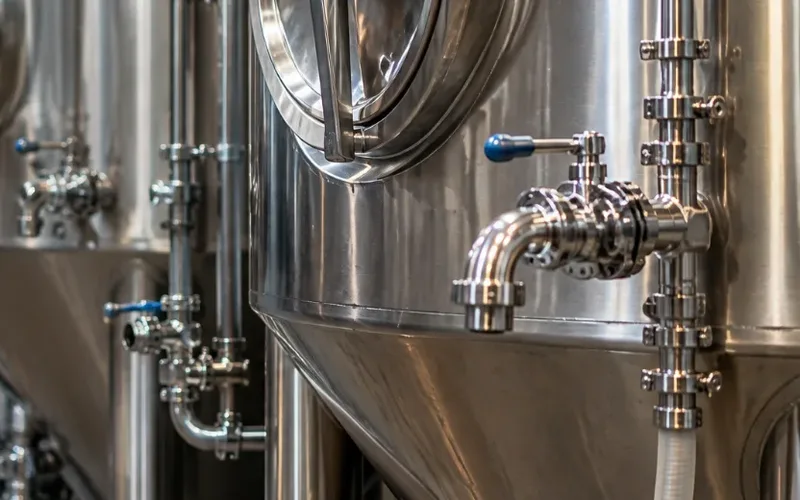
Wort Cooling
Knock out a 30 barrel batch in 45 minutes, land the hot liquor at 175 F and the wort at pitching temperature.
+ Learn More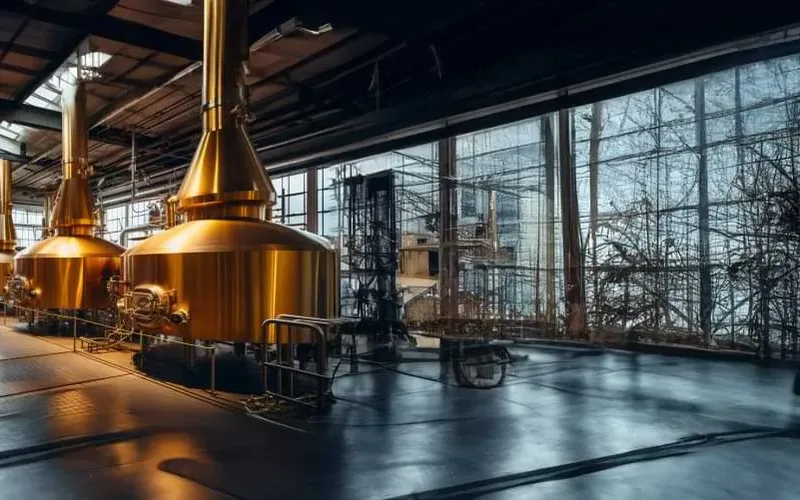
Applications
Distillation & Alcohol
Mash heated and cooled, vapor condensed at the boil-up rate, spirit brought to collection temperature.
+ Learn More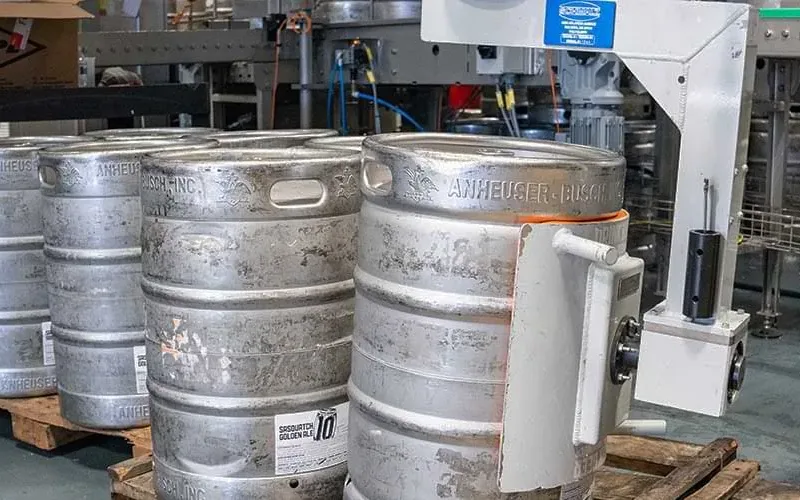
Applications
Beer Pasteurization & Glycol
Flash pasteurize carbonated beer under pressure, feed the tunnel, and keep the cellar on glycol.
+ Learn More