
1-805-484-2992
Quotes - Engineering - SalesMash, wash, still and spirit
Four exchangers between the grain and the barrel
A distillery moves heat in four places. The mash cooker heats grain and water to 150 to 190 F for conversion and the mash cooler brings it to 85 F for the yeast. The still, pot or column, boils the wash and the condenser has to turn every pound of that vapor back to liquid. A dephlegmator at the top of a column returns part of the vapor as reflux. And the spirit cooler brings the distillate from 170 F to 65 to 70 F for collection and proofing.
Each has its own sizing logic: mash exchangers on solids and viscosity, condensers on boil-up rate and cooling water temperature, the dephlegmator on reflux ratio.
Mash, condenser, dephlegmator and spirit cooler
Mash heating and cooling
Grain-in mash for bourbon and whiskey is 15 to 25 percent solids at 500 to 2,000 cP after gelatinization, and it goes from the cooker at 190 F to the fermenter at 85 F. That cooler is a multi-tube with 1-1/2 inch tubes or a single tube-in-tube at 2 inch bore, running at 1.5 to 3 ft/s so the husks stay suspended, with cooling water in the annulus that leaves at 150 to 170 F and goes to the next mash-in.
The hot water for a jacketed cooker and for strike water comes from a U-tube steam-to-water set sized on the coincident peak of mash-in, still jacket and CIP; sized on the average, it starves the second still while the first comes to the boil.
Still condensers sized on boil-up
A still condenser is sized on vapor rate, and the vapor rate is set by the heat input, not the charge volume. A pot still on a jacket rated for 600,000 Btu/h boils off about 600 lb/h of ethanol-water vapor; a column produces vapor in proportion to its steam. The condenser is a vertical shell-and-tube, vapor in the tubes, water on the shell, vented at the top and drained at the bottom, sized at the warmest August cooling water with a 15 to 25 degree approach.
The vapor temperature changes through the run: heads come over near 173 F, hearts around 180 to 190 F and tails toward 212 F as the ethanol depletes, so the condenser sees its highest load at the end of the run. Still condensers and dephlegmators for spirits are covered in more depth on our distilled spirits condenser pages.
Dephlegmators and spirit coolers
A dephlegmator is a partial condenser at the top of a column, run with throttled cooling water so that a set fraction of the vapor condenses and falls back as reflux while the rest goes on to the product condenser. Its area sets the maximum reflux ratio the column can reach, so it is sized generously; the water valve is what the distiller operates during a run.
The spirit cooler takes the condensate at 140 to 170 F to 65 to 70 F for collection. It is a small plate or tube-in-tube on tower water then glycol, built for a flammable liquid: no gaskets that ethanol swells, grounded, drained with no low points.
Copper, stainless and the common mistake
Copper tubes in the condenser and dephlegmator take sulfur compounds out of the vapor and are chosen for whiskey, rum and brandy; 316L gives a neutral spirit. HeatX builds either.
The common mistake is buying a condenser for the still's nominal size and then upgrading the steam supply. The vapor rate doubles, the condenser floods and the run is lost. Send the still type, its steam or heater rating, the cooling water temperature in summer, the reflux ratio on a column, and the collection temperature. Call and talk it through with an engineer: 1-805-484-2992



Distillation and alcohol process conditions
Mash, still vapor and spirit each get their own line below, because each loads an exchanger differently. Put your still rating and summer water temperature beside them, and send both when you ask for a quote.
| Condition | Detail |
| Product | Grain-in mash 15 to 25 percent solids; clear wash; ethanol-water vapor; spirit 60 to 95 percent ABV |
| Flow range | Mash 10 to 200 gpm; still vapor 200 to 20,000 lb/h; spirit 1 to 50 gpm |
| Temperatures in / out | Mash 190 F to 85 F; vapor 173 to 212 F condensed to 100 to 140 F; spirit 170 F to 65 to 70 F |
| Hold | None in the exchangers; conversion rest is in the cooker |
| Utility | Tower or well water at 55 to 85 F on condensers; glycol on spirit coolers; 15 to 50 psig steam on jackets |
| Approach | 15 to 25 degrees on condensers at the warmest water; 10 degrees on spirit coolers |
| Construction | Multi-tube or single tube-in-tube on mash; vertical shell-and-tube condensers, vapor in tubes |
| Finish / class | 316L or copper by the distiller's choice on vapor and spirit; 316L on mash; food-grade drainable |
| CIP | Caustic at 160 F on mash and wash side; condensers steamed and rinsed; copper cleaned with citric |
Common FAQs
On the vapor rate from the still's steam or heater rating at the warmest cooling water the plant sees, with a 15 to 25 degree approach and allowance for the tails end of the run. Charge volume does not enter into it.
It condenses only part of the vapor and sends it back down the column as reflux, so its water flow is throttled rather than full open. Its area sets the maximum reflux ratio; the water valve sets the actual one during the run.
Copper removes sulfur and is preferred for whiskey, rum and brandy; 316L is neutral, cleans easily and is standard on vodka columns. Many distilleries run one of each.
Yes. Cooling water leaves a grain-in mash cooler at 150 to 170 F and goes straight to the next mash-in as strike water, recovering roughly 60 percent of the cooker's steam. The mash cooler is sized with that water outlet temperature as a target.
Related
Applications
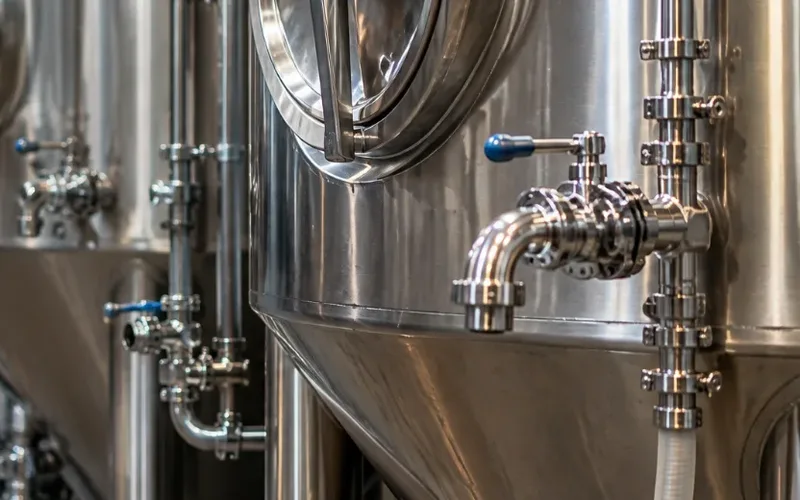
Wort Cooling
Knock out a 30 barrel batch in 45 minutes, land the hot liquor at 175 F and the wort at pitching temperature.
+ Learn More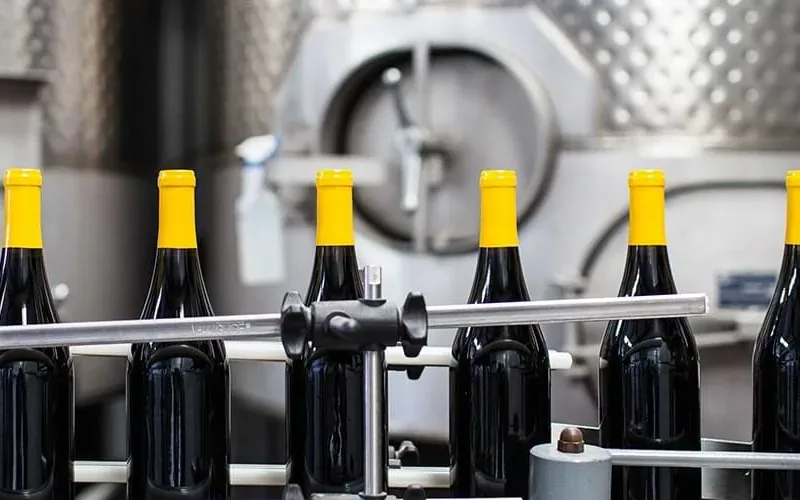
Applications
Wine Must
Cool the must at the crusher, hold it cold for the soak, warm it for the yeast, seeds and skins included.
+ Learn More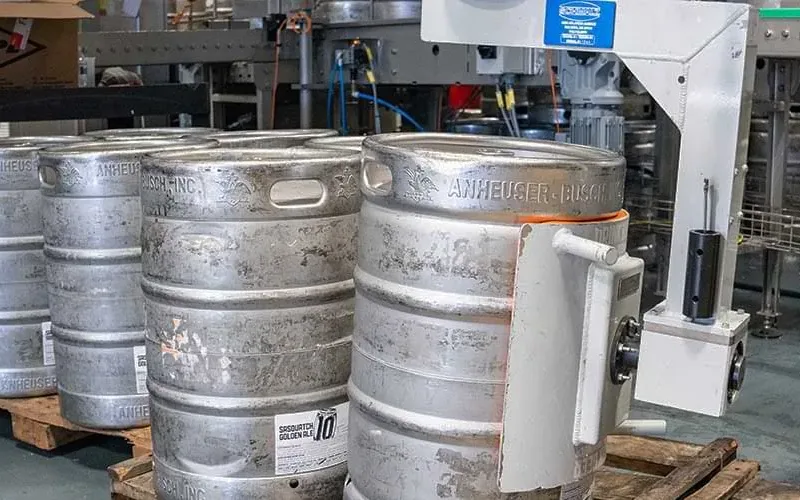
Applications
Beer Pasteurization & Glycol
Flash pasteurize carbonated beer under pressure, feed the tunnel, and keep the cellar on glycol.
+ Learn More