
1-805-484-2992
Quotes - Engineering - SalesSolid and semi-solid fats
Everything is about the slip point
Palm stearin, hydrogenated soybean oil, tallow, lard, cocoa butter equivalents and the fat blends that become shortening and margarine are solid or plastic at 70 F and liquid at 110 to 140 F. The exchanger's task is to melt them, hold them, blend them with water and emulsifier where the product is a margarine, and cool the blend toward its crystallization temperature without letting any of it solidify on a tube wall. A wall a few degrees below the slip point grows a layer of fat in minutes that insulates the tube and then breaks off into the product.
This page is about melting and holding fats, the pre-cooler that brings a fat or emulsion to crystallizer feed temperature, and the tempered water that makes both possible.
Melting, holding, pre-cooling and keeping the tube clear
Melting and holding fats
The first exchanger melts the fat or holds it liquid. Holding and transfer heating is a shell-and-tube or tube-in-tube on hot water at 160 to 200 F that keeps the fat 20 to 30 degrees above its slip point. Steam directly on a fat scorches it; hot water at a 20 to 40 degree approach does the job without the flavor.
Every connection, drain, vent and instrument well on a fat line is heat-traced or jacketed, because fat in a dead leg at ambient sets hard. HeatX builds fat exchangers with jacketed return bends, traced drains and no low point that is not heated.
Pre-cooling toward the crystallizer
Shortening and margarine get their texture in a scraped-surface crystallizer that takes the fat or emulsion from about 110 to 130 F down to 50 to 60 F while working the crystals. The crystallizer is expensive per square foot, so the plant pre-cools the blend in a conventional exchanger first. That pre-cooler is where fats set on walls, and it is designed with tempered water on the utility side at 10 to 20 degrees below the slip point of the blend, never tower water at 85 F, staged so the last-pass wall is still above where crystals nucleate.
A margarine emulsion at 80 percent fat and 20 percent aqueous phase is pasteurized at 165 to 175 F on the way to the pre-cooler where the plant requires it, and the emulsion is shear-sensitive: the exchanger runs at 1 to 2 ft/s in a 2 to 3 inch bore so the emulsion does not break in the tubes.
Shell side or tube side, and the shutdown
On a U-tube shell-and-tube the fat goes on the shell side with the tempered water in the tubes, so the fat has the larger flow area and the lower velocity. On a tube-in-tube the fat is in the bore at 2 to 3 inches and the water in the annulus; either way the fat side is arranged to drain completely from a single low point that is heated.
Shutdown is where fat exchangers are lost. Every fat exchanger has a steam-out or hot water connection to the utility side that clears the product side to the drain, and the control sequence runs it automatically when the product pump stops.
The common mistake
Using the plant's tower water loop on the shortening pre-cooler because it was there. The first pass sets a skin of fat on every tube, the pressure drop triples in an hour and the crystallizer starves. Tempered water at 10 to 20 degrees below the slip point costs a small loop and a mixing valve. Send the fat or blend, its slip point, the flow, the temperatures in and out, and whether the product is an emulsion. Call and talk it through with an engineer: 1-805-484-2992



Fat, shortening and margarine process conditions
Fats are quoted from the melt point outward, so the rows describe the product, the utilities and the build that follow from it. Check them against your line and send your product, flow and temperatures with the request.
| Condition | Detail |
| Product | Palm stearin, hydrogenated oils, tallow, lard, fat blends, margarine emulsion; slip point 90 to 140 F; 20 to 200 cP liquid |
| Flow range | 2,000 to 40,000 lb/h |
| Temperatures in / out | Melting 70 to 150 F; holding 130 to 160 F; pre-cooling 150 F to 110 to 130 F ahead of the crystallizer |
| Hold | None; emulsions pasteurized at 165 to 175 F for 15 to 30 seconds where required |
| Utility | Hot water at 160 to 200 F on melters; tempered water 10 to 20 degrees below slip point on pre-coolers |
| Approach | 20 to 40 degrees on melting; 10 to 20 degrees on pre-cooling, staged |
| Construction | Single tube-in-tube 2 to 3 inch bore; U-tube shell-and-tube with fat on the shell side; steam-traced connections |
| Finish / class | 304L or 316L, 32 Ra; food-grade drainable; heated drains and vents |
| CIP | Hot water melt-out at 180 F before caustic; caustic at 170 F on emulsion lines; steam-out |
Common FAQs
Tempered water on the utility side no more than 10 to 20 degrees below the fat's slip point, staged cooling, low velocity in a large bore, heated drains and a steam-out sequence when the line stops.
Hot water at 160 to 200 F. Steam on the wall scorches the fat and raises free fatty acid and color; the 20 to 40 degree hot water approach melts and holds it without either.
Yes, at 1 to 2 ft/s in a 2 to 3 inch bore with a positive displacement pump. Higher velocity or a narrow plate channel shears the emulsion and it separates before the crystallizer.
The crystallizer is expensive per square foot and its job is texture, not bulk cooling. Taking the blend from 150 F to the feed temperature of 110 to 130 F in a conventional exchanger on tempered water cuts the crystallizer duty by a third.
Related
Applications
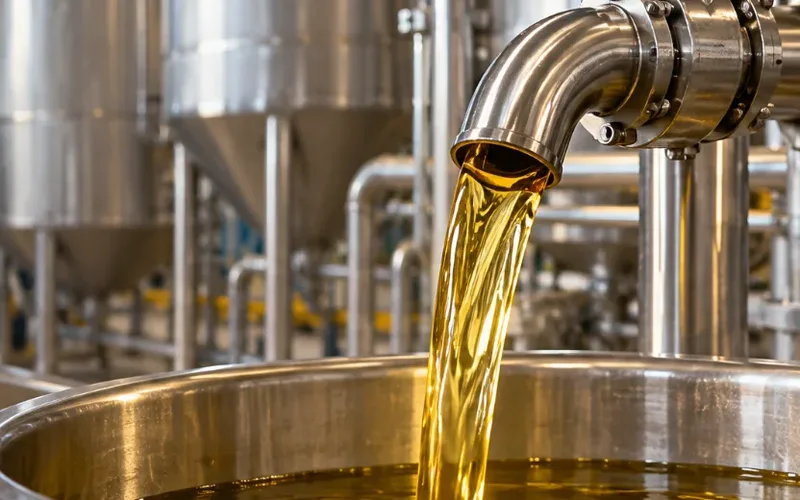
Vegetable Oil Heating & Cooling
The heaters and coolers around the refinery: degumming, neutralizing, bleaching feed and storage.
+ Learn More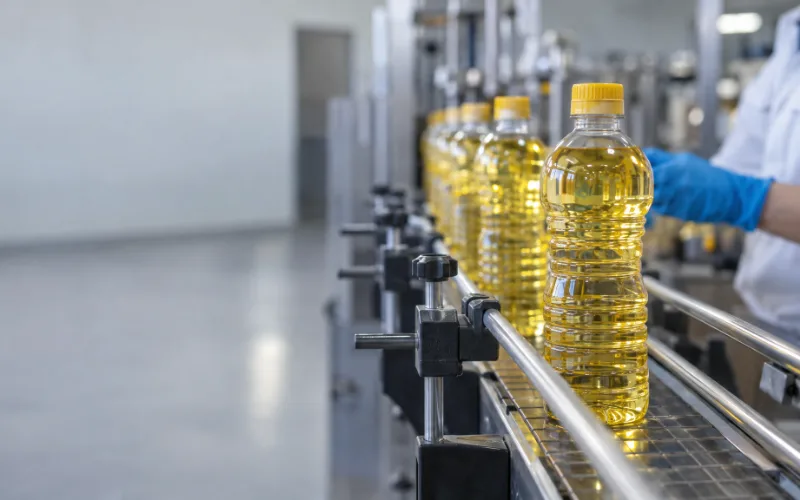
Applications
Deodorizer Heat Recovery
Recover 60 to 80 percent of the deodorizer heat oil-to-oil, then close the last degrees on thermal fluid.
+ Learn More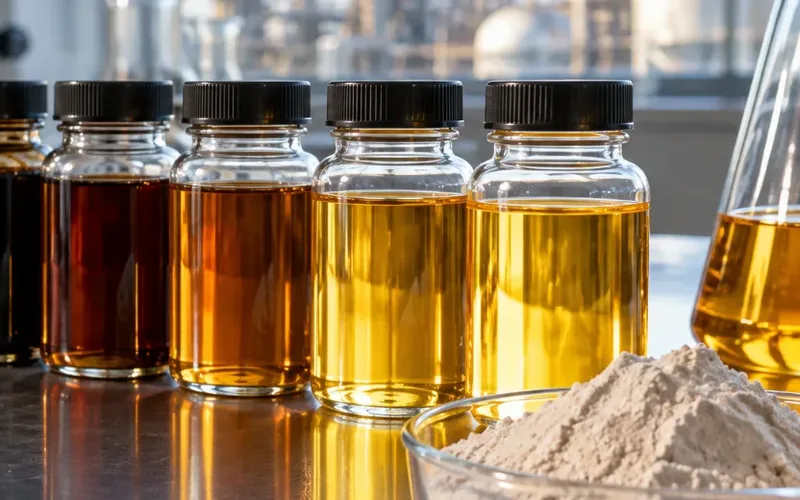
Applications
Bleaching & Winterization
The heater in front of the bleacher and the chiller in front of the wax filter, at opposite ends of the range.
+ Learn More