
1-805-484-2992
Quotes - Engineering - SalesSoybean, canola, sunflower, corn, palm, coconut
Clean fluid, wide temperature range, no water
Crude vegetable oil goes through degumming at 140 to 175 F, caustic neutralization at 160 to 200 F, washing at 190 F, drying under vacuum, bleaching at 180 to 220 F and, after deodorization, cooling to 100 to 120 F for storage or shipment. Each step has a heater or a cooler in front of it: clean oil on one side, steam, hot water or tower water on the other, in a range where gaskets and plates still work.
This page is about those moderate-temperature heaters and coolers; the deodorizer economizer, bleaching and winterization, and fats that solidify have their own pages.
Heaters, coolers and what oil asks of them
Heating for degumming, neutralizing and bleaching
Crude oil at 80 to 100 F from storage is heated to 140 to 175 F for degumming with water or acid, to 160 to 200 F for caustic neutralization, and after washing and drying to 180 to 220 F for bleaching with clay. The heaters are steam-heated shell-and-tube or plate exchangers, sized on a 15 to 25 degree approach, with the oil on the tube side of a shell-and-tube so the steam side can be carbon steel. A plate exchanger is the cheaper choice below 250 F and 150 psig.
Crude oil carries gums, phosphatides and a little water and it fouls the heater at the inlet where it first warms; a shell-and-tube with removable bonnets or a U-tube bundle is easier to open than a plate pack for that reason. Neutralized oil with soapstock and wash water is the corrosive stream in the plant, and its heaters are 316L on the product side.
Cooling for storage and shipment
Refined oil leaves the deodorizer economizer at 200 to 240 F and has to be cooled to 100 to 120 F before it goes to a storage tank or a rail car, because a warm tank oxidizes faster. The cooler is a shell-and-tube or plate exchanger on tower water at 85 F with a 15 degree approach, sized on the cold-end viscosity, which for soybean oil at 100 F is about 30 cP and for palm oil is a paste unless the oil is kept above 110 F.
The cooled oil is sparged or blanketed with nitrogen as it enters the tank, and the cooler itself is fully drainable so that no oil sits in it during a shutdown to go rancid and contaminate the next batch.
Oil-to-oil recovery below the deodorizer
Wherever a hot oil stream and a cold one exist at the same time, an oil-to-oil exchanger saves steam: neutralized oil at 190 F warming crude feed from 90 F, bleached oil at 220 F leaving the filter against degummed oil coming in. These are modest duties with coefficients of 60 to 100 Btu/h-ft2-F on both sides, so the exchangers are long and the terminal approach is 30 to 40 degrees; below that the area grows faster than the recovery.
Plates handle oil-to-oil well up to 250 F; above that, or with crude solids on one side, it is a shell-and-tube with the dirty stream in the tubes.
The common mistake
Specifying 316L everywhere because it is food. Refined oil has no water, chloride or acid, and 304L serves it for decades at a lower price. The money belongs on the neutralizer and wash heaters where caustic and soapstock are present. Send the oil type, the section of the refinery, the flow, the temperatures in and out on both sides, and the steam pressure. Call and talk it through with an engineer: 1-805-484-2992




Vegetable oil heating and cooling process conditions
The rows list what the refinery heaters and storage coolers are sized to, from crude oil through to the deodorized product. Compare your oil and steam supply with them and send what differs.
| Condition | Detail |
| Product | Crude, degummed, neutralized, bleached or deodorized oil; 5 to 60 cP over the range |
| Flow range | 5,000 to 100,000 lb/h; 10 to 250 gpm |
| Temperatures in / out | Heaters 80 to 220 F; storage coolers 200 to 100 F; palm oil kept above 110 F throughout |
| Hold | None; residence time is in the reactors and bleacher |
| Utility | 15 to 150 psig steam or hot water on heaters; tower water at 85 F on coolers; oil-to-oil where streams allow |
| Approach | 15 to 25 degrees on steam heaters; 15 degrees on tower water coolers |
| Construction | Gasketed plate to 250 F on clean oil; straight tube or U-tube shell-and-tube on crude and on steam above 50 psig |
| Finish / class | 304L on refined oil, 316L on the neutralizer and wash sections; food-grade drainable, polished product side |
| CIP | Hot oil flush at changeover; caustic wash on the neutralizer heater; opened on interval |
Common FAQs
Plates on clean oil below 250 F and 150 psig, which covers most refinery heaters and coolers. Shell-and-tube on crude with gums and solids, on steam above 50 psig, and on every duty above 250 F.
Refined oil has no free water or chloride, so there is nothing to pit stainless. 304L is standard on refined oil heaters and coolers; 316L is used where caustic, soapstock or wash water are present.
100 to 120 F for most oils, to slow oxidation and for safe loading. Palm oil and other fats are held above their cloud point, about 110 F for palm, so they stay pumpable.
Not in the dairy sense. It is flushed with hot oil at changeover, the neutralizer heater gets a caustic wash, and the unit is opened on a maintenance interval for polymerized oil. Full drainability matters more than a CIP connection.
Related
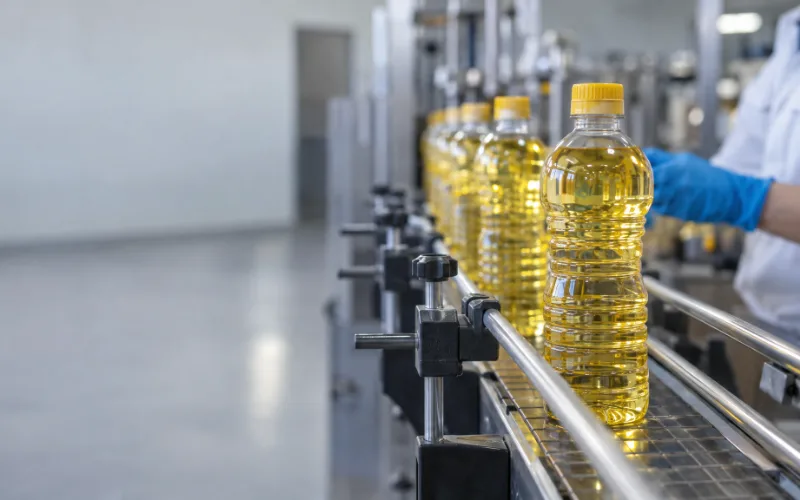
Applications
Deodorizer Heat Recovery
Recover 60 to 80 percent of the deodorizer heat oil-to-oil, then close the last degrees on thermal fluid.
+ Learn More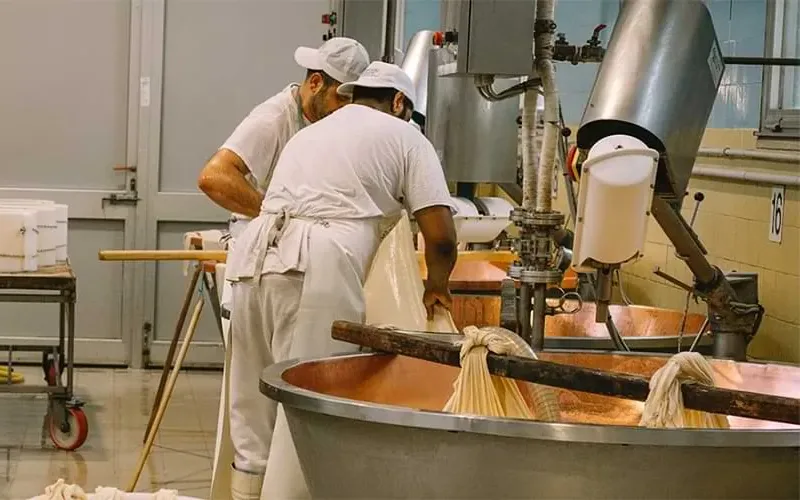
Applications
Fats, Shortening & Margarine
Solid at room temperature, kept liquid until the crystallizer and never allowed to set on a wall.
+ Learn More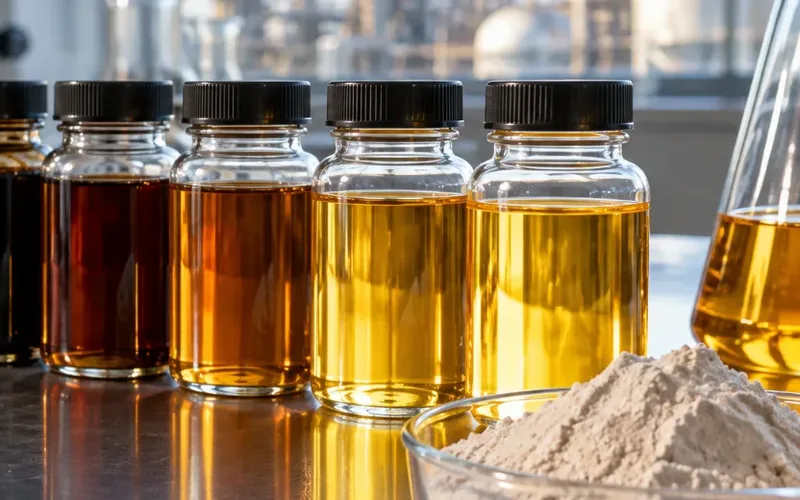
Applications
Bleaching & Winterization
The heater in front of the bleacher and the chiller in front of the wax filter, at opposite ends of the range.
+ Learn More